
Health and Performance Benefits of Professional Vehicle Window Tinting in Tucson
Living in the Sonoran Desert means facing some of the most intense solar radiation in the United States. According to the U.S. Department of Energy, windows can account for up to 87% of heat entering a vehicle, making professional window tinting not just an aesthetic choice but a critical health intervention for Tucson residents. This guide explores how high-quality film protects your skin, preserves your vehicle interior, and enhances driving safety in extreme desert conditions. (Contact Us)
Why Tucson Drivers Need Professional Tinting
Tucson experiences over 300 days of sunshine annually. This relentless exposure creates a unique set of challenges for vehicle owners. Standard glass allows ultraviolet (UV) rays and infrared (IR) radiation to pass through unchecked. Over time, this leads to accelerated aging of both the human body and the vehicle itself.
Professional window tinting serves as a barrier against these elements. It is not merely about making windows look darker. It is about engineering a climate control layer that works in tandem with your vehicle's air conditioning system. By reducing the thermal load on your car, you improve fuel efficiency and reduce wear on your HVAC components.
For those seeking durable solutions, professional window tinting services provide films designed specifically for high-heat environments. These films are tested to withstand the thermal cycling that occurs when temperatures swing from 110 degrees Fahrenheit in the day to cooler evenings.
Health Benefits: UV Protection and Skin Safety
The primary health benefit of window tinting is the blockage of harmful ultraviolet radiation. UV radiation is a known carcinogen that contributes to skin aging and cancer. Most standard automotive glass blocks UVB rays, which cause burning, but allows UVA rays to pass through. UVA rays penetrate deeper into the skin and are responsible for premature aging and long-term damage.
High-quality window tint films can block up to 99% of these harmful rays. This protection is vital for drivers who spend significant time on the road, such as sales professionals, delivery drivers, or commuters using the I-10 corridor. The cumulative effect of daily exposure adds up quickly.
According to the Skin Cancer Foundation, daily use of broad-spectrum sunscreen is recommended to prevent skin cancer. Window tint acts as a passive, continuous sunscreen for your arms and face while driving. This is particularly important for individuals with fair skin or a history of skin issues.
Furthermore, UV protection extends to your eyes. Prolonged exposure to UV light increases the risk of cataracts and macular degeneration. By filtering out these rays, tinting contributes to long-term ocular health. It is a simple investment in your physical well-being that pays dividends over decades of driving.
Performance Benefits: Heat Rejection and Comfort
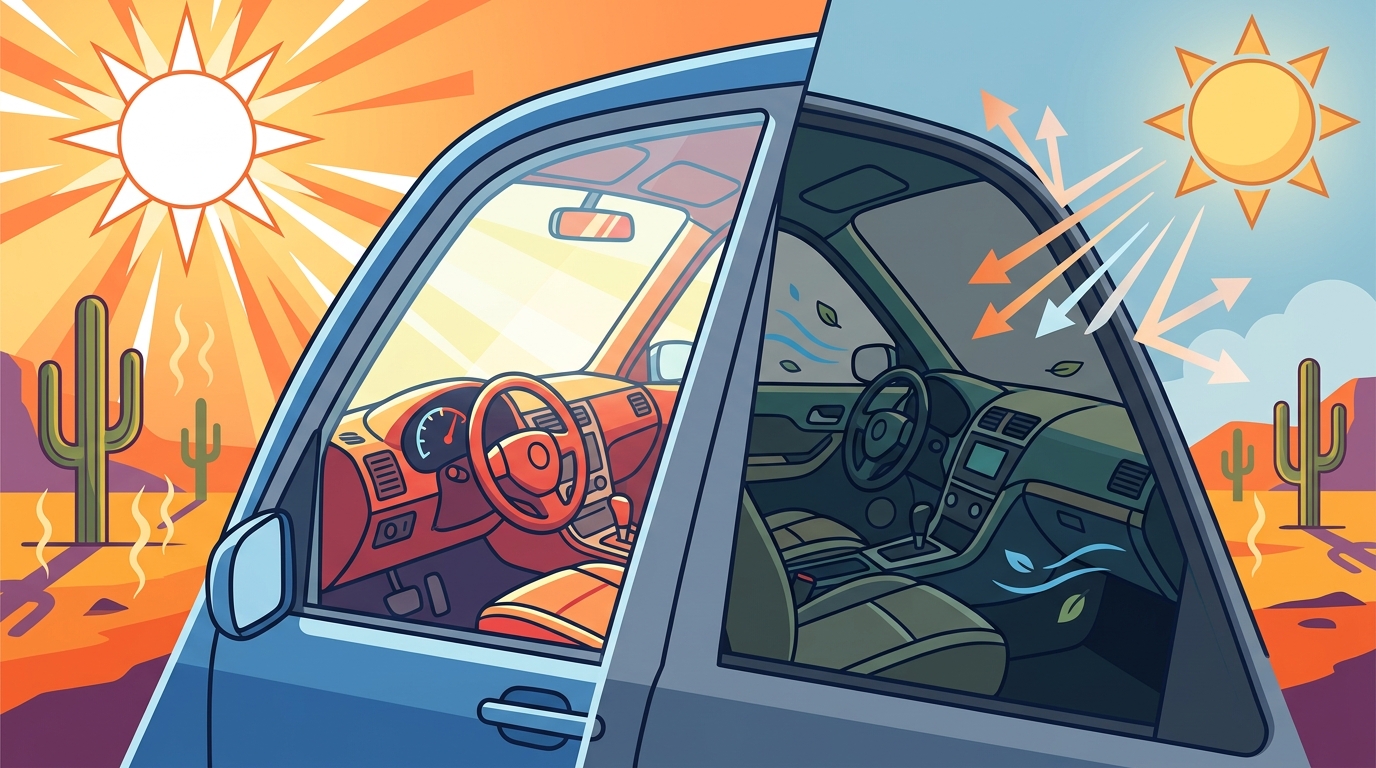
Heat rejection is the most immediate performance benefit of window tinting. Infrared radiation is the primary source of heat from the sun. Standard glass allows a significant portion of this heat to enter the cabin. This forces your air conditioning system to work harder to maintain a comfortable temperature.
Professional tinting films, especially ceramic and carbon options, reflect and absorb infrared radiation. This results in a cooler cabin environment without straining your engine. A cooler cabin means less reliance on the A/C compressor, which can lead to marginal improvements in fuel economy.
Comfort is also enhanced by reduced thermal radiation. You feel the heat not just from the air temperature but from the radiant heat hitting your skin. Tinted windows eliminate this radiant heat source, creating a more pleasant driving experience. This is crucial during Tucson's long summer months when dashboard temperatures can exceed 150 degrees Fahrenheit.
For more details on how heat rejection works, energy efficiency guides from the Department of Energy provide technical data on film performance. Understanding these metrics helps you choose the right film for your specific needs.
Interior Preservation and Longevity
Your vehicle's interior is a significant investment. Leather seats, dashboard plastics, and fabric carpets are all susceptible to damage from UV exposure and heat. UV rays break down the chemical bonds in these materials, leading to fading, cracking, and brittleness.
Window tinting acts as a shield for your interior. By blocking UV rays and reducing heat, you preserve the color and texture of your upholstery. This is especially important for luxury vehicles or classic cars where interior condition directly impacts resale value.
Heat also causes materials to expand and contract. Over time, this thermal cycling can lead to delamination of dashboards and warping of trim pieces. By stabilizing the interior temperature, tinting reduces this stress. It keeps your car looking newer for longer.
If you are concerned about your vehicle's value, learning more about our commitment to quality can help you understand the importance of professional installation. Poorly installed tint can bubble and peel, offering no protection and ruining the aesthetic.
Safety, Glare Reduction, and Privacy
Glare from the sun can be a serious safety hazard, particularly during sunrise and sunset. It reduces visibility and increases reaction times. Window tinting reduces this glare, making driving safer and less fatiguing. This is especially beneficial on open highways where there are no trees or buildings to provide shade.
Privacy is another key benefit. Tinted windows make it difficult for outsiders to see into your vehicle. This deters theft by hiding valuables from view. It also provides a sense of security for passengers, particularly children or pets left in the car for short periods.
Additionally, window film adds a layer of safety in the event of an accident. High-quality films hold shattered glass together. This prevents glass shards from flying into the cabin, reducing the risk of injury. It also makes it harder for break-ins to occur, as the film adds resistance to breaking the window.
For insights on safety standards, AAA provides extensive resources on vehicle safety features. They emphasize the importance of visibility and protection in all driving conditions.
Ceramic vs. Carbon vs. Dyed Film Comparison
Choosing the right film is critical for maximizing benefits. Here is a comparison of the most common types available in Tucson:
| Feature | Ceramic Film | Carbon Film | Dyed Film |
|---|---|---|---|
| Heat Rejection | High (Superior) | Medium-High | Low |
| UV Protection | 99% Block | 95% Block | 90% Block |
| Signal Interference | None | None | None |
| Fade Resistance | Excellent | Excellent | Poor |
| Cost | Higher | Medium | Lower |
Ceramic film is the top choice for Tucson due to its superior heat rejection without signal interference. Carbon film offers a great balance of performance and cost. Dyed film is primarily for aesthetics and offers minimal heat protection.
To see the difference for yourself, view our gallery of completed tinting projects. Real-world examples demonstrate the clarity and performance of professional installations.
Key Takeaways
- UV Blockage: Professional tint blocks up to 99% of harmful UV rays, protecting skin and eyes.
- Heat Reduction: Ceramic films can reject up to 60% of total solar energy, significantly cooling the cabin.
- Interior Protection: Tinting prevents fading and cracking of leather and dashboard materials.
- Safety: Film holds shattered glass together, reducing injury risk in accidents.
- Glare Reduction: Enhanced visibility and reduced eye strain during bright desert driving.
- Privacy: Deters theft by hiding valuables from outside view.
- Longevity: High-quality films last 10+ years without bubbling or peeling when professionally installed.
Frequently Asked Questions
How long does window tint last in Tucson?
High-quality ceramic or carbon window tint can last 10 to 15 years or more. Lower-quality dyed films may fade or bubble within 2 to 5 years due to the intense sun exposure.
Is window tint legal in Arizona?
Arizona law allows any darkness of tint on the windshield's non-reflective area and on the side windows. There are no restrictions on visible light transmission (VLT) for side windows in Arizona, making it one of the most tint-friendly states.
Does window tint interfere with GPS or cell signals?
No, ceramic and carbon films are non-metallic and do not interfere with GPS, cell phone, or radio signals. Metalized films can cause interference, which is another reason ceramic is preferred.
Can I wash my car after tinting?
You should wait at least 3 to 7 days after installation before washing your car. This allows the adhesive to cure fully and prevents the edges from lifting.
How much does professional window tinting cost?
Cost varies based on the vehicle size and film type. Ceramic tint is more expensive upfront but offers better performance and longevity, making it a better long-term investment for Tucson drivers.
Does tinting improve fuel efficiency?
Indirectly, yes. By reducing the heat load, your air conditioning system works less, which reduces engine strain and can lead to slight improvements in fuel economy.
What is the best tint for Tucson's climate?
Ceramic window tint is the best option for Tucson. It offers the highest heat rejection and UV protection without darkening the windows excessively or interfering with electronics.
Schedule Your Professional Installation
Don't let the Tucson sun damage your health or your vehicle. Professional window tinting is an essential upgrade for any driver in the desert. At Vista Glass, we specialize in high-performance ceramic and carbon films tailored to our local climate.
Contact us today to schedule your consultation and installation. Protect your skin, preserve your car, and drive in comfort. Visit our contact page to get started.