
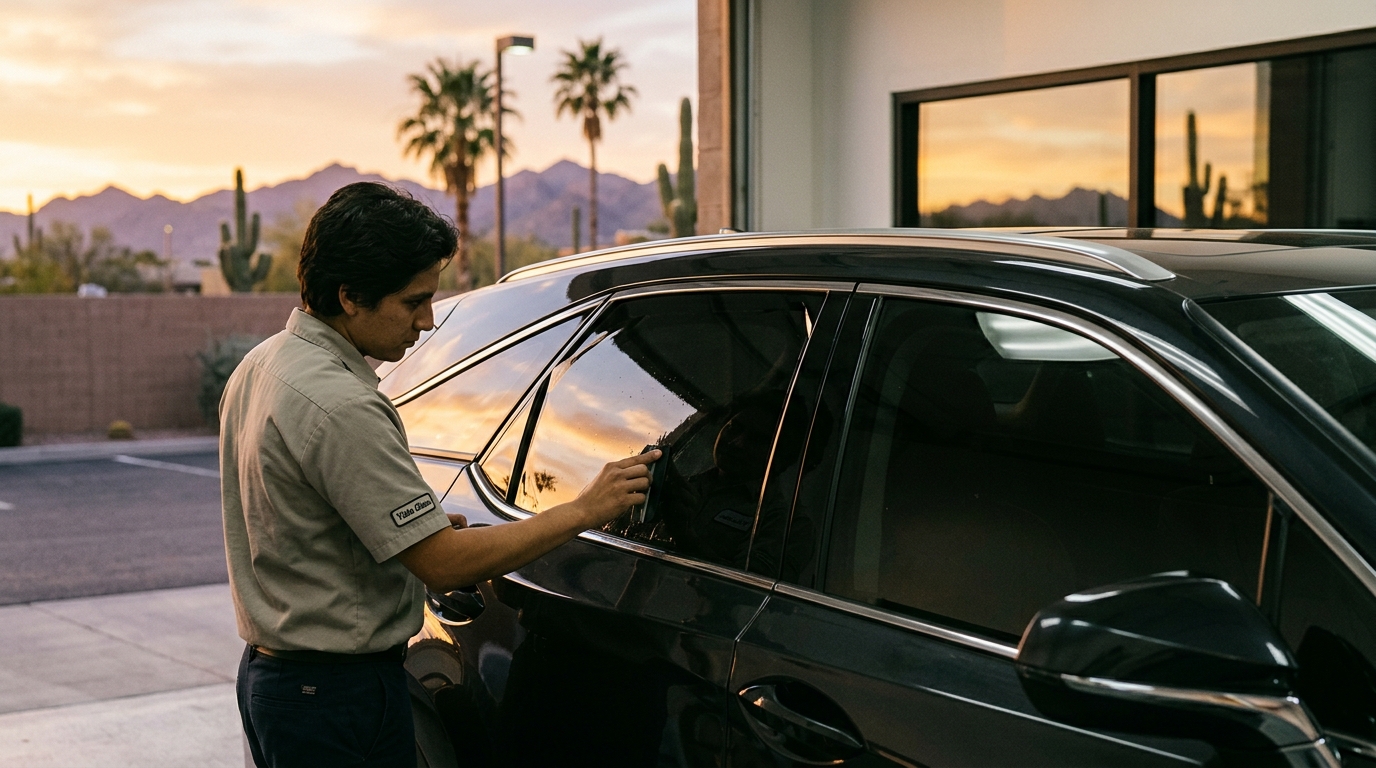
Arizona’s intense solar radiation and extreme summer temperatures create a unique demand for vehicle window tinting that goes beyond mere aesthetics. According to the U.S. Department of Energy, solar heat gain through windows can account for up to 76% of the energy used to cool a typical home, a principle that applies equally to vehicles parked under the relentless Tucson sun. For drivers in Pima County, professional tinting is not just a style choice but a functional necessity for thermal comfort and UV protection. This guide details the specific legal limits enforced by the Arizona Department of Transportation and explains why hiring a certified local installer like Vista Glass ensures both compliance and long-term durability.
Understanding Arizona Window Tint Laws
Navigating the legal landscape of window tinting in Arizona requires precise knowledge of the state's specific regulations. Arizona is known for having some of the most permissive tint laws in the United States, which allows for significant customization while maintaining safety standards. Windshield tinting is strictly regulated to ensure driver visibility remains unobstructed. The law permits a non-reflective tint on the windshield, but it must be applied only to the top four inches of the glass. This strip, often referred to as the AS-1 line, helps reduce glare from the sun without interfering with the driver's forward view.
For side windows, the regulations are far more flexible. Arizona law allows any darkness of tint on the front and rear side windows. This means you can choose the darkest available film for maximum privacy and heat rejection without violating state statutes. However, the rear window can also be tinted to any darkness, provided the vehicle is equipped with dual side mirrors that provide adequate visibility to the rear. This flexibility makes Arizona an attractive location for enthusiasts who desire a uniform, dark look across their entire vehicle.
Reflectivity is another critical factor in legal compliance. Arizona law prohibits reflective tints that mirror the outside environment, particularly on the front side windows. This regulation is designed to prevent blinding other drivers with reflected sunlight. When selecting a tint, it is essential to ensure the film is non-reflective or has minimal reflectivity to pass inspection. Vista Glass specializes in high-quality, non-reflective films that meet these strict guidelines while delivering superior performance. For more details on our compliance standards, visit our Window Tinting service page.
The Functional Benefits of Professional Tinting
Beyond legal compliance, professional window tinting offers substantial functional advantages for vehicle owners in Tucson. The primary benefit is thermal control. High-quality tint films can reject a significant portion of solar energy, keeping the interior of your vehicle cooler. This reduction in heat load directly translates to less strain on your air conditioning system, which can improve fuel efficiency and extend the life of your HVAC components. In a city where temperatures regularly exceed 100 degrees Fahrenheit, this thermal management is crucial for comfort.
UV protection is another critical benefit. Prolonged exposure to ultraviolet rays can cause skin damage and increase the risk of skin cancer for drivers and passengers. Additionally, UV radiation is a primary cause of interior degradation, leading to fading, cracking, and peeling of dashboards, seats, and other upholstery. Professional tint films can block up to 99% of harmful UV rays, preserving the value and appearance of your vehicle's interior. This preservation is particularly important for classic cars and high-end vehicles where interior condition significantly impacts resale value.
Enhanced privacy and security are also significant advantages. Tinted windows make it more difficult for outsiders to see into your vehicle, deterring potential thieves from targeting your car for valuables. This added layer of security provides peace of mind, especially when parking in public areas or busy urban centers. Furthermore, safety glass films can hold shattered glass together in the event of an accident or break-in, reducing the risk of injury from flying glass shards. For those interested in these safety features, our Glass Replacement services also cover safety film applications.
Why Local Expertise Matters in Tucson
Choosing a local installer with deep regional knowledge is vital for achieving optimal results. Tucson's unique climate presents specific challenges for window tinting, including intense UV exposure and extreme temperature fluctuations. These conditions can cause lower-quality films to bubble, peel, or discolor over time. A local expert like Vista Glass understands these environmental factors and selects materials specifically engineered to withstand the Arizona climate. Our technicians are trained to handle the precise cutting and installation techniques required for various vehicle makes and models, ensuring a flawless finish.
Local installers also have a vested interest in maintaining their reputation within the community. Vista Glass has been serving the Tucson and Cochise County areas for over two decades, building a reputation for reliability and quality. Our team stays updated on the latest tinting technologies and legal updates, ensuring that every installation is both compliant and cutting-edge. This local presence means we can offer prompt service and personalized consultation, addressing your specific needs and concerns. You can learn more about our history and mission on our About Us page.
Additionally, local expertise ensures that you receive advice tailored to your specific driving habits and vehicle usage. Whether you commute daily in heavy traffic or enjoy weekend off-roading, we can recommend the ideal tint shade and type for your lifestyle. This personalized approach guarantees that you get the best possible performance from your investment. For a deeper understanding of our service area and coverage, please visit our Location page.
Film Types and Technology Comparison
Selecting the right type of window film is crucial for achieving your desired balance of aesthetics, performance, and budget. There are several types of tint films available, each with distinct characteristics. Dyed film is the most affordable option and provides good privacy and glare reduction. However, it offers less heat rejection and may fade over time. This type is suitable for those primarily seeking aesthetic enhancement on a budget.
Metallized film contains tiny metallic particles that reflect heat and UV rays. It is more durable than dyed film and does not fade easily. However, it can interfere with electronic signals such as GPS, radio, and cell phone reception. This interference can be a significant drawback for modern vehicles with advanced connectivity features. If you require signal transparency, this type may not be the best choice.
Carbon film is a popular middle-ground option. It offers excellent heat rejection without the signal interference associated with metallized films. Carbon film also has a matte finish that looks sleek and does not fade. It is highly durable and resistant to fading, making it a long-term investment. For those seeking the highest performance, ceramic film is the premium choice. Ceramic tint uses non-conductive ceramic particles to block heat and UV rays without interfering with electronics. It provides the best heat rejection and clarity, making it ideal for the intense Tucson sun. Explore our Window Tinting options to see which film best suits your needs.
| Film Type | Heat Rejection | Signal Interference | Durability | Best For |
|---|---|---|---|---|
| Dyed | Low to Moderate | None | Low | Budget-conscious aesthetics |
| Metallized | Moderate to High | Yes | High | Maximum durability |
| Carbon | High | None | High | Balanced performance |
| Ceramic | Very High | None | Very High | Ultimate heat rejection |
The Professional Installation Process
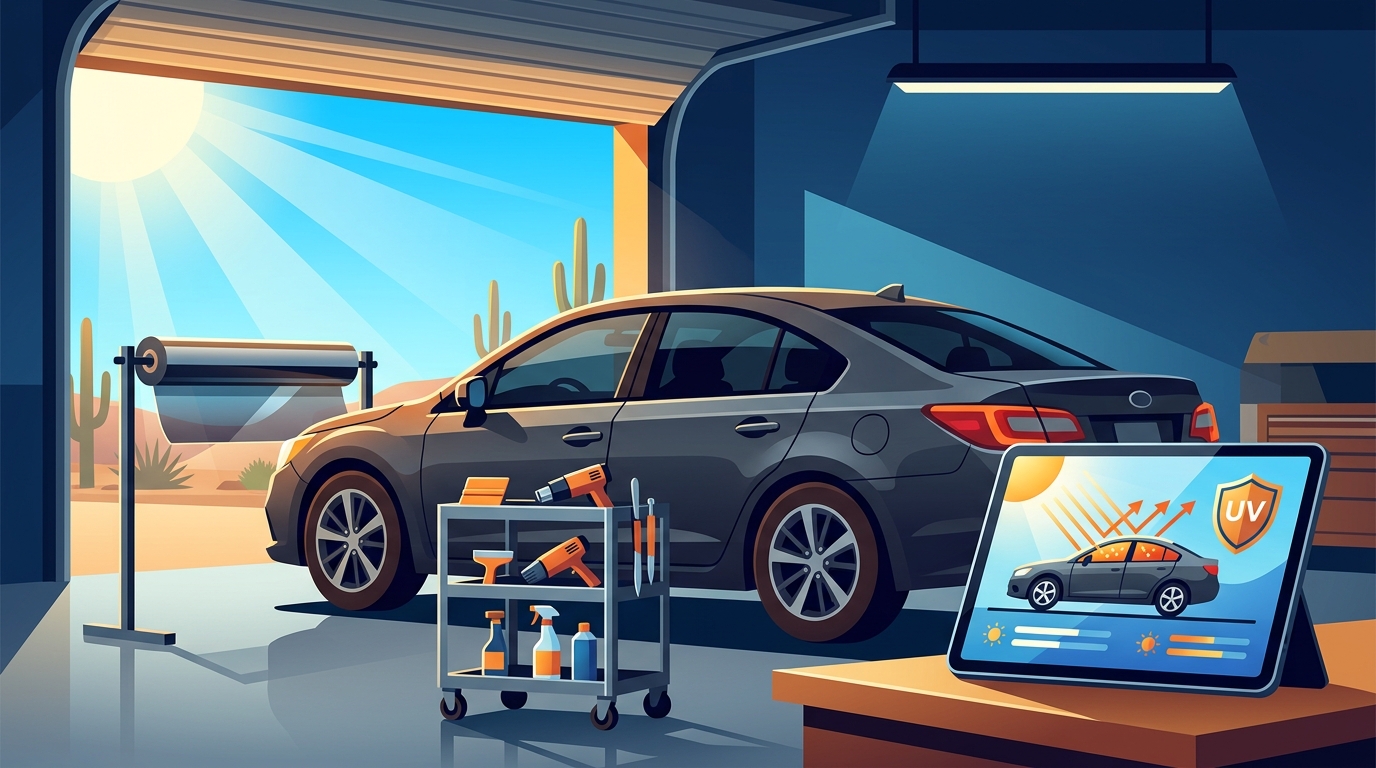
Professional installation is the key to the longevity and appearance of your window tint. The process begins with a thorough cleaning of the glass surfaces to remove any dirt, dust, or debris. Even microscopic particles can cause imperfections in the final product. Our technicians then carefully measure and cut the film to fit each window precisely. This step requires skill and experience to ensure a perfect fit without gaps or overlaps.
During installation, the film is applied to the interior side of the glass using a specialized solution that allows for positioning and adjustment. Once the film is correctly placed, it is squeegeed to remove any air bubbles or excess fluid. The edges are then trimmed and sealed to prevent peeling. After installation, the vehicle must be kept dry and the windows rolled up only after a specified curing period, which can vary depending on the film type and weather conditions. Vista Glass provides detailed aftercare instructions to ensure your tint lasts for years. For more information on our service guarantees, check our Blog section.
Key Takeaways
- Arizona law allows any darkness of tint on side and rear windows, provided the vehicle has dual side mirrors.
- Non-reflective tint is permitted on the windshield, but it must be applied only to the top four inches.
- Professional tinting can reject up to 99% of harmful UV rays, protecting both skin and interior upholstery.
- Ceramic and carbon films offer superior heat rejection without interfering with electronic signals.
- Vista Glass has served the Tucson and Cochise County communities since 2000, ensuring local expertise.
- Local installers understand the specific climate challenges of the region and select appropriate materials.
- Proper installation and aftercare are critical for the longevity and appearance of the tint.
Frequently Asked Questions
What is the legal tint limit for car windows in Arizona?
Arizona law does not specify a minimum Visible Light Transmission (VLT) percentage for side and rear windows, allowing any darkness. However, the windshield can only have non-reflective tint on the top four inches. Reflective tints are prohibited on the front side windows.
How long does window tinting take in Tucson?
A standard vehicle tinting job typically takes between two to four hours, depending on the size of the vehicle and the type of film used. Complex installations or additional services like paint protection may take longer.
Can window tinting interfere with my GPS or cell signal?
Metallized films can interfere with electronic signals. However, carbon and ceramic films are non-conductive and do not interfere with GPS, radio, or cell phone signals, making them ideal for modern vehicles.
How long does window tint last?
High-quality professional window tint can last between five to ten years or more. Factors such as exposure to sunlight, climate conditions, and maintenance practices can affect its lifespan.
Do you offer a warranty on window tinting?
Yes, Vista Glass offers warranties on our tinting services and materials. The specific terms of the warranty depend on the type of film selected. Please contact us for detailed warranty information.
Can I tint my windows myself?
While DIY kits are available, professional installation is recommended to ensure a bubble-free, durable finish that complies with local laws. Improper installation can lead to peeling, bubbling, and legal issues.
What is the best tint for Tucson's climate?
Ceramic tint is often considered the best option for Tucson due to its superior heat rejection and UV protection without signal interference. It effectively handles the intense solar radiation typical of the region.
Schedule Your Professional Tinting Service
Ready to enhance your vehicle's comfort, style, and protection? Contact Vista Glass today to schedule your professional window tinting service in Tucson. Our expert team is ready to help you choose the perfect film and ensure a flawless installation that meets all Arizona legal requirements. Call us at 520-744-7766 or visit our Contact Us page to get started. Trust Vista Glass for quality you can count on.