
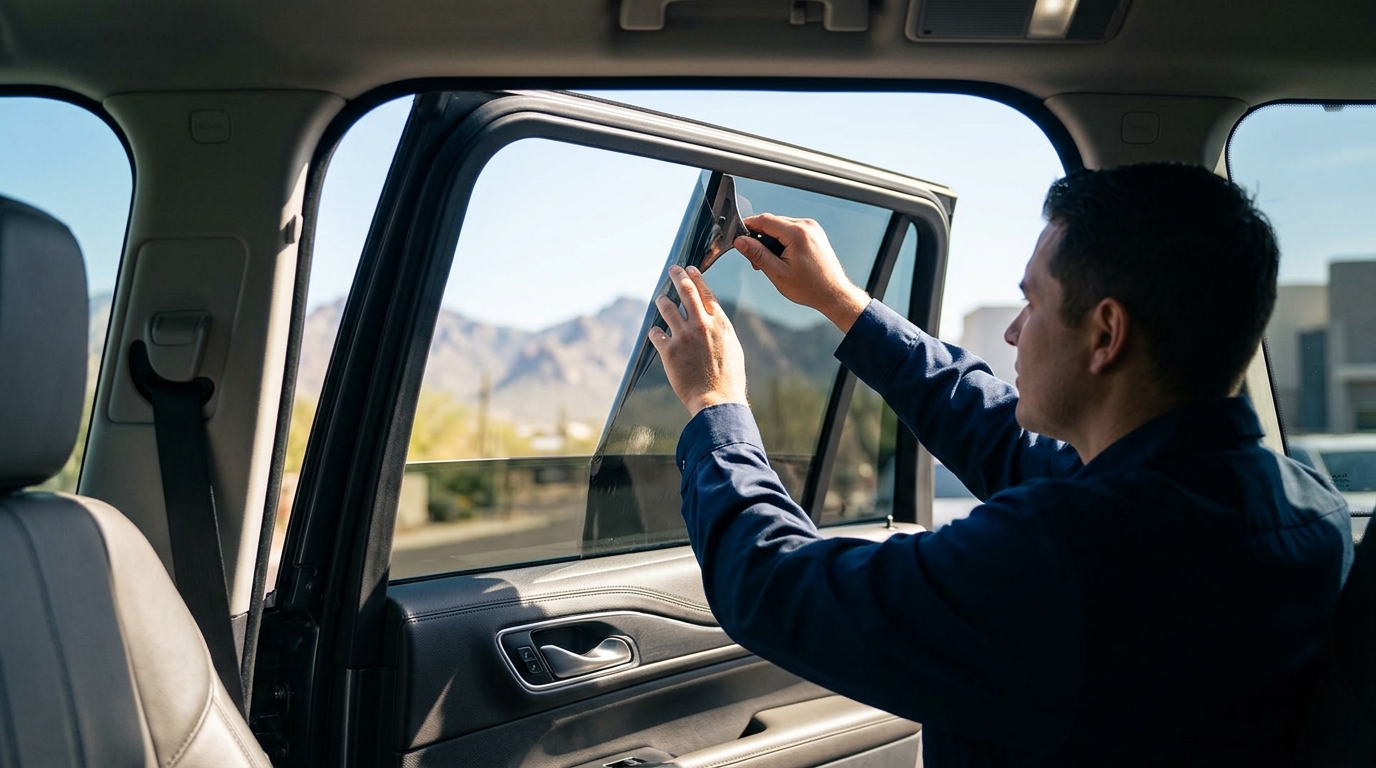
Arizona’s intense solar radiation and extreme summer temperatures create a unique environment for vehicle owners, making professional window tinting not just a style choice but a functional necessity. According to the U.S. Department of Energy, window tinting can reject up to 60% of total solar energy, significantly reducing interior heat buildup and protecting upholstery from UV damage. This guide details the precise legal limits for vehicle tint in Arizona, evaluates the benefits of professional installation, and explains why Vista Glass in Tucson is the trusted choice for compliant, high-quality tinting services. (About Vista Glass)
Understanding Arizona Window Tint Laws
Navigating the legal landscape of window tinting in Arizona requires strict adherence to state statutes to avoid fines and vehicle inspection failures. Arizona Revised Statutes (ARS) 28-963 governs the permissible levels of darkness, measured by Visible Light Transmission (VLT), for various vehicle windows. (Location Vista Glass)
Windshield Regulations
The most critical regulation applies to the windshield. Arizona law strictly prohibits any tint on the windshield, with one specific exception. Manufacturers are permitted to apply a non-reflective tint strip along the top six inches of the windshield. This strip is designed to reduce glare from the sun without obstructing the driver's forward view. Any attempt to tint the rest of the windshield is illegal and will result in a citation during traffic stops or vehicle inspections.
Side Windows and Rear Windows
For the side windows of sedans, SUVs, and vans, Arizona law is notably permissive compared to many other states. The law allows for any darkness of tint on the side windows and the rear window. This means you can legally install 5% "limo" tint on all side and rear windows if you prefer maximum privacy and heat rejection. However, there is a crucial caveat regarding reflectivity. The tint must not be reflective or mirror-like. Reflective tints are prohibited because they can dazzle other drivers and interfere with law enforcement's ability to see inside the vehicle.
Medical Exemptions
While standard regulations are lenient on darkness, they are strict on reflectivity. If you have a medical condition that requires protection from UV rays or heat, you may apply for a medical exemption. This exemption allows for reflective tints that would otherwise be illegal. To qualify, you must provide documentation from a licensed physician stating your medical necessity. The process involves submitting this documentation to the Arizona Motor Vehicle Division (MVD) to receive a special decal or permit that must be kept in the vehicle at all times.
Why Professional Tinting Matters in Tucson
Tucson experiences over 300 days of sunshine annually, with summer temperatures frequently exceeding 100 degrees Fahrenheit. In this environment, the quality of your window tint directly impacts your comfort, vehicle longevity, and safety. Professional installation ensures that the film is applied with precision, avoiding common DIY pitfalls like bubbling, peeling, or discoloration.
Heat Rejection and UV Protection
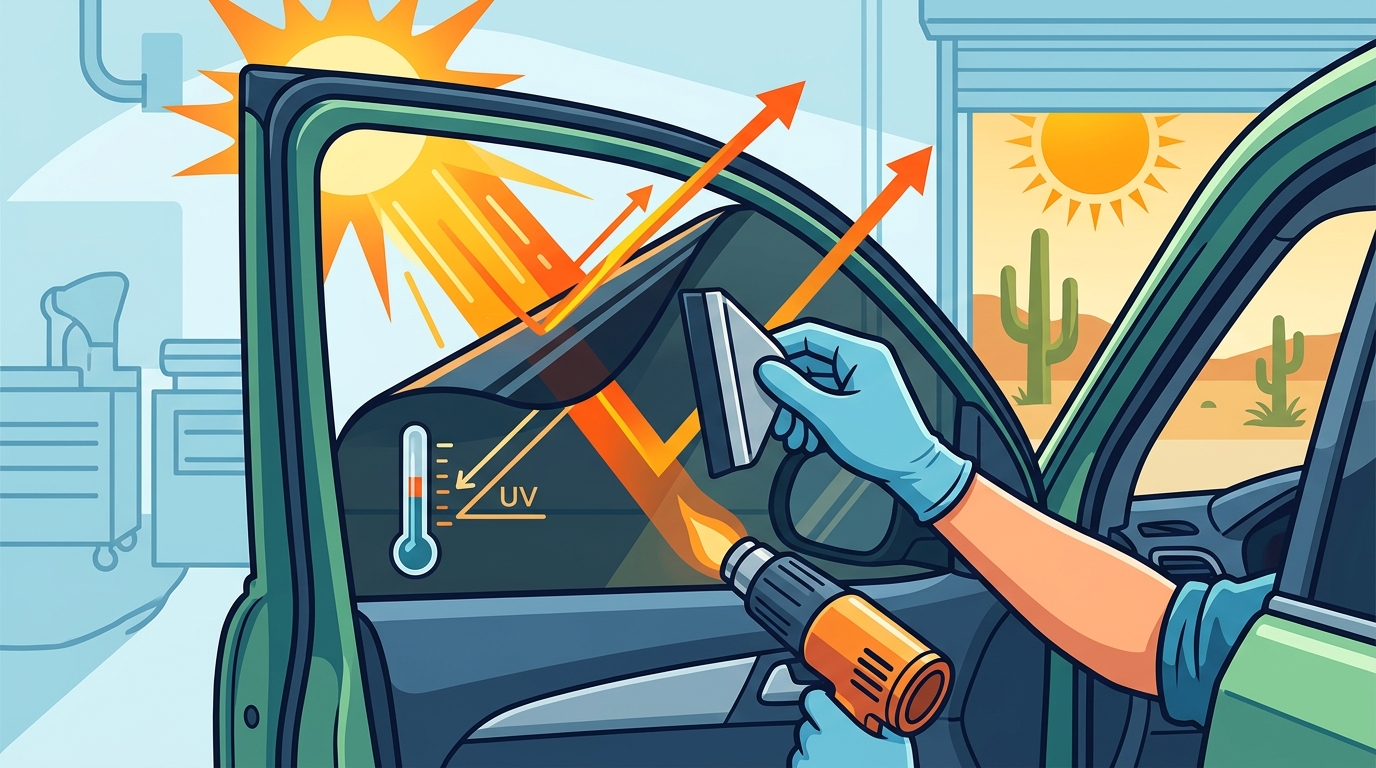
High-quality professional tinting films are engineered to block harmful ultraviolet (UV) rays. Prolonged exposure to UV radiation can cause skin damage and accelerate the aging of your vehicle's interior, including cracking leather seats and fading dashboards. Professional-grade films can block up to 99% of UV rays, providing a protective barrier for both your health and your investment. Additionally, advanced ceramic or carbon films offer superior heat rejection compared to standard dyed films, keeping the cabin significantly cooler and reducing the load on your air conditioning system.
Glare Reduction and Safety
Driving in Tucson often means dealing with intense sun glare, particularly during sunrise and sunset. Professional tinting reduces this glare, improving visibility and reducing eye strain. This is especially important for drivers who commute on highways like I-10 or I-19, where long stretches of open road expose drivers to direct sunlight. By reducing glare, tinting enhances overall driving safety and comfort.
Service Options: Vista Glass vs. General Installers
When choosing a provider for window tinting in Tucson, it is essential to compare the value proposition of specialized glass companies against general automotive shops. Vista Glass offers a distinct advantage due to its comprehensive expertise in both automotive and residential/commercial glass solutions.
| Feature | Vista Glass | General Auto Detailers |
|---|---|---|
| Expertise | Specialized in glass replacement and tinting with decades of experience. | Often secondary service; may lack deep glass-specific knowledge. |
| Warranty | Backed by manufacturer warranties and company guarantee. | Varies widely; often limited or non-existent. |
| Materials | Premium, high-grade films designed for extreme heat rejection. | May use lower-cost dyed films that fade quickly. |
| Compliance | Ensures all installations meet Arizona state laws. | Risk of non-compliant reflective or overly dark tints. |
| Emergency Service | Offers 24/7 emergency glass services for urgent needs. | Typically standard business hours only. |
The Professional Installation Process
Understanding the installation process helps set realistic expectations for your vehicle window tinting service. At Vista Glass, the process is meticulous and designed to ensure a flawless finish that lasts for years.
Preparation and Cleaning
The first step involves a thorough cleaning of the glass surfaces. Any dirt, dust, or residue left on the glass can cause bubbles or imperfections in the final product. Technicians use specialized tools and solutions to ensure the glass is perfectly clean before the film is applied.
Precision Cutting and Application
Professional installers use pre-cut patterns or custom-cut the film to fit your specific vehicle make and model. This precision ensures that the film fits perfectly around edges and curves without requiring excessive trimming. The film is then applied using a slip solution, allowing the technician to position it accurately before squeegeeing out any air or water bubbles.
Curing and Inspection
After application, the tint requires a curing period, typically ranging from a few days to a few weeks depending on the type of film and weather conditions. During this time, it is important to avoid rolling down the windows to prevent the film from shifting. Once cured, the technician performs a final inspection to ensure there are no defects and that the tint meets all legal requirements.
Key Takeaways
- Legal Limits: Arizona law allows any darkness of tint on side and rear windows, but prohibits reflective tints unless a medical exemption is granted. The windshield can only have a non-reflective strip on the top six inches.
- Heat Rejection: Professional tinting can reject up to 60% of solar energy, significantly reducing interior temperatures and protecting against UV damage.
- Vista Glass Expertise: With over two decades of experience, Vista Glass has served Cochise and Pima County, establishing itself as a leader in glass services.
- Medical Exemptions: Drivers with specific medical conditions can apply for exemptions to use reflective tints by providing documentation from a licensed physician.
- Quality Matters: High-quality films offer better durability, heat rejection, and UV protection compared to cheaper alternatives, making them a worthwhile investment for Tucson drivers.
- Emergency Services: Vista Glass offers 24/7 emergency glass services, ensuring help is available whenever you need it.
- Compliance: Professional installers ensure that all tinting work complies with Arizona state laws, avoiding potential fines and inspection failures.
Frequently Asked Questions
What is the legal tint limit for car windows in Arizona?
Arizona law does not specify a minimum VLT percentage for side and rear windows, allowing any darkness. However, the tint must not be reflective. The windshield can only have a non-reflective tint strip on the top six inches.
Can I get a medical exemption for reflective tint in Arizona?
Yes, you can apply for a medical exemption if you have a documented medical condition that requires protection from UV rays or heat. You must provide documentation from a licensed physician to the Arizona MVD.
How long does it take for window tint to cure?
The curing process typically takes between a few days to a few weeks. During this time, you should avoid rolling down the windows to prevent the film from shifting or bubbling.
Does Vista Glass offer warranty on window tinting?
Yes, Vista Glass provides warranties on its window tinting services, ensuring customer satisfaction and protection against defects in materials or workmanship.
What types of tint films does Vista Glass offer?
Vista Glass offers a variety of high-quality tint films, including ceramic, carbon, and dyed options, each designed to provide different levels of heat rejection, UV protection, and aesthetics.
Is window tinting worth it in Tucson's climate?
Absolutely. Given Tucson's extreme heat and sun exposure, professional window tinting is highly recommended to reduce interior temperatures, protect against UV damage, and improve driving comfort.
How do I schedule an appointment for window tinting?
You can schedule an appointment by calling Vista Glass at 520-744-7766 or by visiting their contact page online to fill out a request form.
Contact Vista Glass
Ready to enhance your vehicle's comfort, safety, and style with professional window tinting in Tucson? Vista Glass is your trusted partner for all glass services, from windshield replacement to premium tinting installations. Our team of experienced technicians is dedicated to providing top-quality service that meets your needs and complies with Arizona state laws. Contact us today to schedule your appointment and experience the Vista Glass difference.