
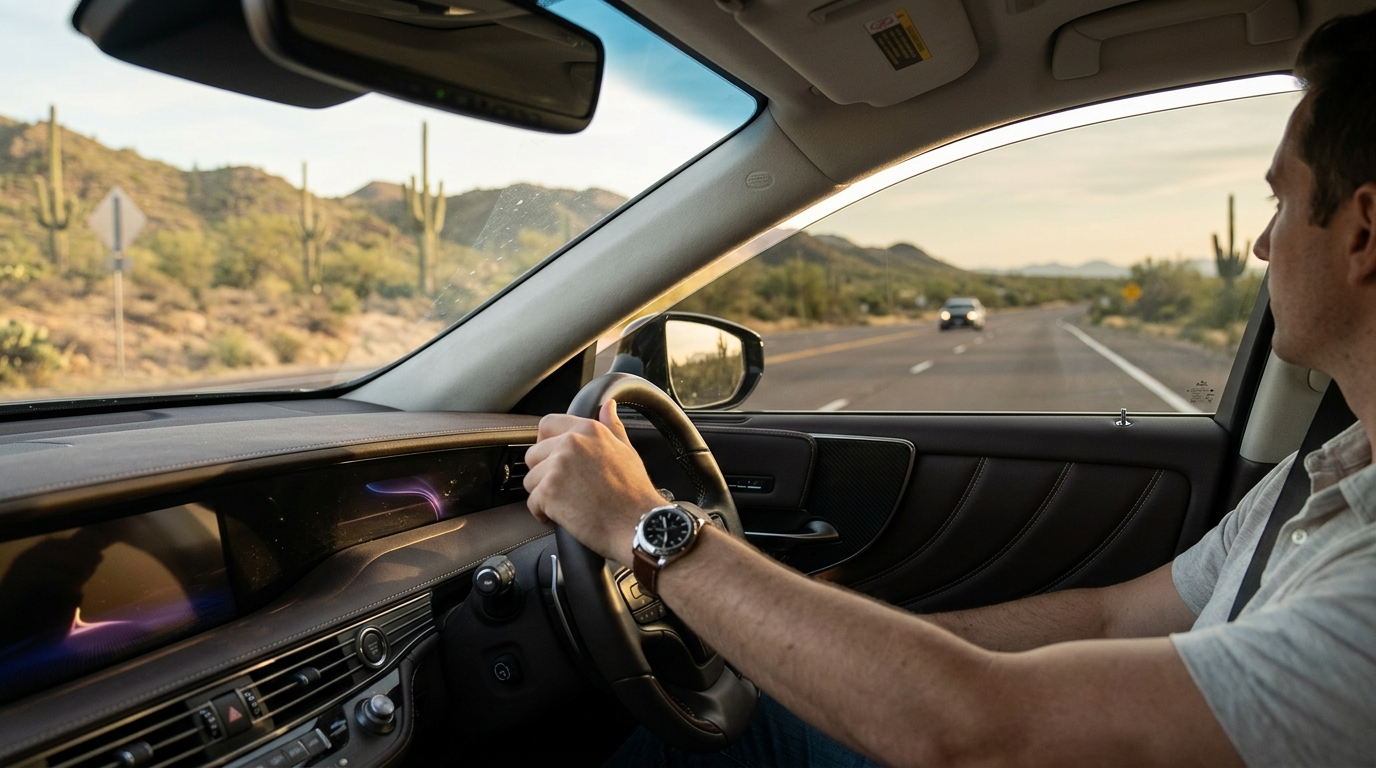
Arizona maintains some of the strictest window tinting regulations in the United States, designed to ensure driver visibility and law enforcement safety. According to the Arizona Department of Transportation, traffic safety initiatives prioritize clear visibility to reduce accident rates on high-speed highways. Understanding these legal boundaries is not merely a bureaucratic hurdle but a critical component of vehicle safety and legal compliance. This guide provides a definitive breakdown of the current standards, helping vehicle owners and professionals navigate the nuances of Visible Light Transmission (VLT) percentages and reflective limits. (About Vista Glass)
Understanding the Legal Framework
Window tinting in Arizona is governed by Title 28 of the Arizona Revised Statutes. The core metric used to measure compliance is Visible Light Transmission, or VLT. This percentage indicates how much light passes through the window and the tint film combined. A lower VLT number means a darker tint. Arizona law mandates that the front side windows of most vehicles must allow at least 33% of light to pass through. This standard is significantly darker than the 50% or 70% VLT requirements found in many northern states. (Blog Vista Glass)
The rationale behind these strict limits is rooted in public safety. Dark tints can obscure the view of law enforcement officers when approaching a vehicle at night. It also impacts the ability of other drivers to make eye contact, which is a subtle but important safety cue in traffic. For professional installers, adhering to these metrics is non-negotiable. Vista Glass ensures that every installation meets these precise legal thresholds, protecting clients from fines and ensuring their vehicles remain road-legal. (Location Vista Glass)
Sedan and Coupe Tint Requirements
For sedans and coupes, the regulations are uniform across all side windows. The law requires that the front side windows, which are the windows immediately next to the driver and front passenger, must have a VLT of 33% or higher. This means the tint cannot be darker than a light gray shade. The rear side windows and the rear windshield can technically be any darkness, provided the vehicle has both left and right side mirrors that provide a clear view of the road behind the vehicle.
However, there is a critical distinction between the rear windows and the front windows. While the rear windows can be very dark, the front side windows cannot. This is where many vehicle owners make costly mistakes. Installing dark tint on the front doors is a common violation that leads to traffic stops and mandatory removal of the film. Professional installers must measure the VLT of the film before application to ensure it meets the 33% minimum for the front side windows.
SUV, Van, and Truck Regulations
Multi-purpose vehicles, including SUVs, vans, and pickup trucks, operate under a different set of rules regarding the rear windows. Similar to sedans, the front side windows of these vehicles must also meet the 33% VLT requirement. This ensures that the driver has adequate visibility and that law enforcement can see into the front cabin. The distinction lies in the rear portion of the vehicle.
For SUVs, vans, and trucks, the rear side windows and the rear windshield can be tinted to any darkness level. This allows for greater privacy and sun protection for passengers in the back seats. However, this exemption does not apply to the front side windows. If you drive a pickup truck with a cap, the windows in the cap are subject to the same rules as the rear windows of an SUV. They can be dark, but the windows next to the driver and front passenger must remain light enough to meet the 33% VLT standard.
Reflective Tint Restrictions
Arizona law places strict limits on the reflectivity of window tint films. The statute prohibits the application of any reflective material that mirrors the outside environment. This is to prevent glare that could blind other drivers or confuse law enforcement officers. The law specifies that the tint cannot be more than 35% reflective. This means the film can have a slight metallic or ceramic sheen, but it cannot act like a mirror.
Excessive reflectivity is a common issue with lower-quality dyed films or cheap metallic tints. These films often appear shiny from the outside, which is a clear violation of Arizona law. High-quality ceramic tints, often used by professional companies like Vista Glass, offer heat rejection without excessive reflectivity. This allows vehicle owners to enjoy the benefits of tinting, such as heat reduction and UV protection, without violating the reflective limits. It is crucial to choose films that are certified as non-reflective to ensure compliance.
Medical Exemption Process
Arizona recognizes that certain medical conditions require individuals to be protected from sunlight and UV radiation. If you have a medical condition that makes you sensitive to sunlight, you may be eligible for a medical exemption. This exemption allows you to install darker tint on your front side windows, below the 33% VLT threshold. However, the process is rigorous and requires documentation.
To obtain a medical exemption, you must submit a signed statement from a licensed physician. The statement must clearly describe the medical condition and explain why exposure to sunlight is harmful to you. This documentation is then submitted to the Arizona Motor Vehicle Division (MVD). Once approved, you will receive a medical exemption card that must be kept in your vehicle at all times. If pulled over, you can present this card to the officer to justify your darker tint.
It is important to note that the exemption only applies to the specific vehicle listed on the card. If you change vehicles, you must apply for a new exemption for the new car. Vista Glass can assist you in understanding the requirements for medical exemptions, but the final approval rests with the MVD and your healthcare provider.
Compliance Checklist for Installation
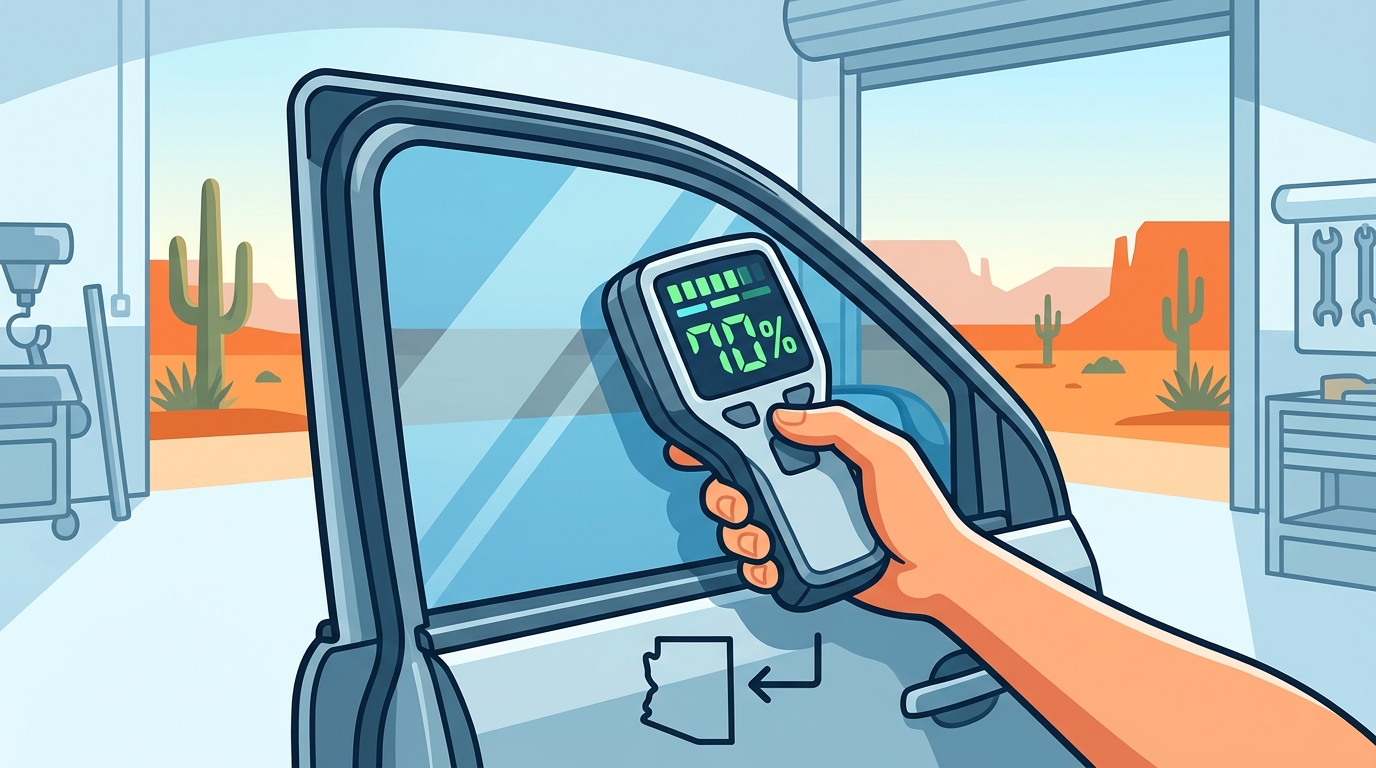
For vehicle owners and installers, ensuring compliance involves a systematic check of several factors. First, verify the type of vehicle you are working on. Sedans, SUVs, and trucks have different rules for rear windows. Second, measure the VLT of the film. Use a professional VLT meter to ensure the front side windows meet the 33% minimum. Third, check the reflectivity of the film. Ensure it does not exceed 35% reflectivity to avoid glare issues. Finally, consider the medical exemption if applicable. If you have a medical condition, ensure you have the proper documentation before installing darker tints.
| Vehicle Type | Front Side Windows | Rear Side Windows | Rear Windshield | Reflective Limit |
|---|---|---|---|---|
| Sedan / Coupe | Min 33% VLT | Any Darkness | Any Darkness | Max 35% Reflective |
| SUV / Van / Truck | Min 33% VLT | Any Darkness | Any Darkness | Max 35% Reflective |
| Medical Exemption | Any Darkness (with Doc) | Any Darkness | Any Darkness | Max 35% Reflective |
Key Takeaways
- Arizona law requires a minimum of 33% VLT for all front side windows on sedans, SUVs, and trucks.
- Rear side windows and rear windshields can be tinted to any darkness level on multi-purpose vehicles.
- Reflective tint is limited to a maximum of 35% to prevent glare and ensure safety.
- Medical exemptions are available for those with sunlight-sensitive conditions, requiring physician documentation.
- Non-compliant tint can result in fines and mandatory removal, making professional installation critical.
- High-quality ceramic films offer heat rejection without violating reflective limits.
- Vista Glass provides certified installation services that ensure full compliance with Arizona statutes.
Frequently Asked Questions
What is the minimum VLT for front side windows in Arizona?
The minimum Visible Light Transmission (VLT) for front side windows in Arizona is 33%. This means the tint must allow at least 33% of light to pass through.
Can I put any darkness tint on the rear windows of my SUV?
Yes, for SUVs, vans, and pickup trucks, the rear side windows and rear windshield can be tinted to any darkness level, provided the front side windows meet the 33% VLT requirement.
How do I get a medical exemption for darker tint?
You must obtain a signed statement from a licensed physician detailing your medical condition. Submit this to the Arizona MVD to receive a medical exemption card.
Is reflective tint allowed in Arizona?
Reflective tint is allowed but limited to a maximum of 35% reflectivity. Tints that are too shiny or mirror-like are illegal.
What happens if I fail a tint inspection?
If your vehicle fails a tint inspection, you will be required to remove the non-compliant tint. You may also face fines depending on the severity of the violation.
Does Vista Glass offer medical exemption assistance?
Vista Glass can provide guidance on the requirements for medical exemptions and ensure your installation meets the necessary standards once approved.
Why is the 33% VLT standard important?
The 33% VLT standard is crucial for ensuring that law enforcement can see into the vehicle and that drivers have adequate visibility, especially at night.
Ensure Your Vehicle is Legal and Safe
Navigating Arizona's window tint laws can be complex, but professional installation ensures compliance and safety. Vista Glass offers expert window tinting services that adhere strictly to state regulations. Our team uses high-quality, non-reflective films that provide heat rejection and UV protection without violating legal limits. Contact us today to schedule your appointment and drive with confidence.
Contact Vista Glass to book your professional window tinting service in Tucson and surrounding areas.