
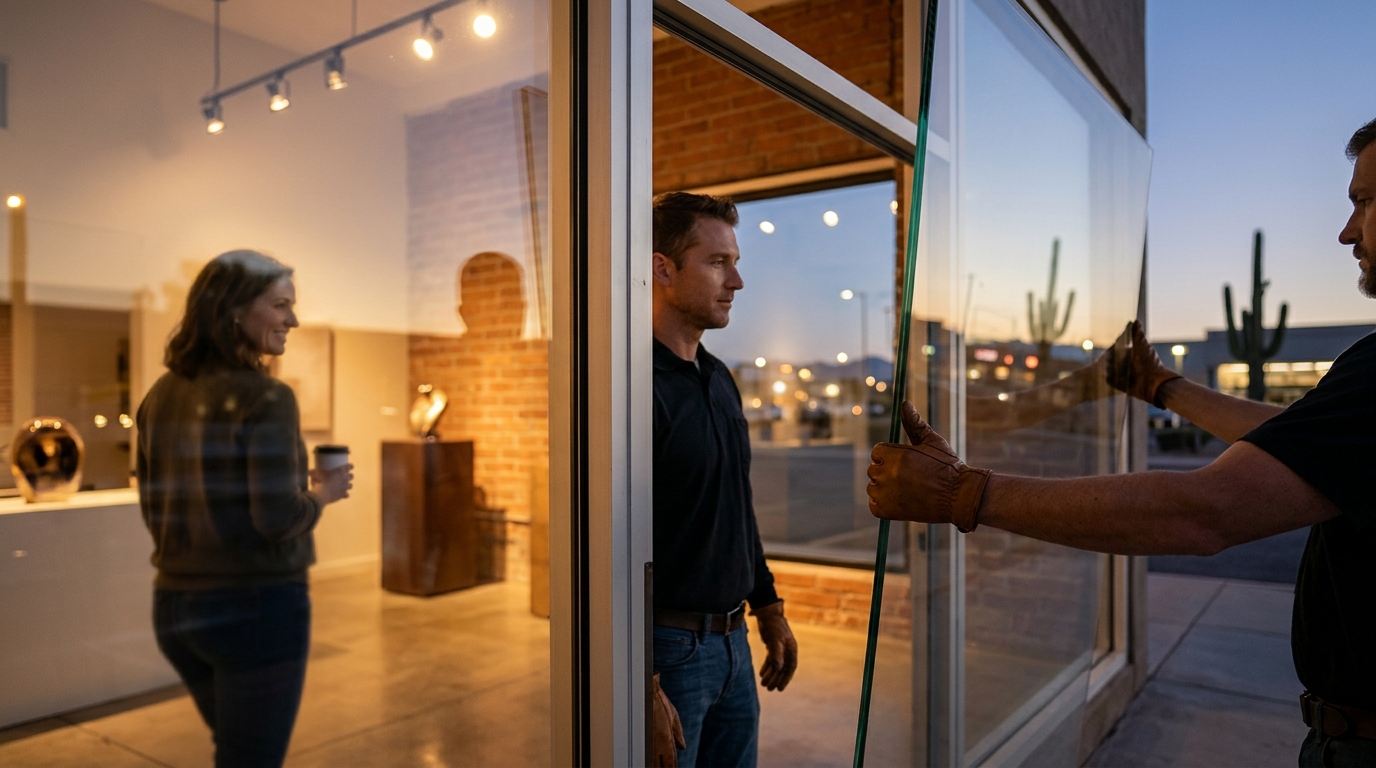
Storefront Window Replacement: Essential Guide for Tucson Businesses
Storefront window replacement is a critical investment that directly impacts your business's security, energy efficiency, and curb appeal. Before proceeding, you must evaluate the structural integrity of your existing frames, understand local building codes, and select the appropriate glass type for your specific climate and security needs. This guide outlines the key factors to consider to ensure a successful and cost-effective project.
Assessing the Condition of Existing Frames
The first step in any replacement project is a thorough inspection of the existing window frames. If the frames are made of wood and show signs of rot, or if metal frames are corroded, you may need to replace the entire assembly rather than just the glass. This assessment prevents future structural issues and ensures the new windows fit properly. A professional inspection can identify hidden damage that is not visible from the outside.
Choosing the Right Glass Type
Storefront glass is not one-size-fits-all. You must choose between tempered, laminated, or insulated glass based on your priorities. Tempered glass is four times stronger than standard glass and shatters into small, less dangerous pieces, making it ideal for high-traffic areas. Laminated glass offers superior security because it holds together when broken, which is crucial for businesses with high-value inventory. Insulated glass provides better energy efficiency, which is particularly important in Tucson's extreme heat.
Understanding Local Building Codes and Permits
Compliance with local building codes is non-negotiable for commercial projects. In Tucson, specific regulations govern the type of glass used in storefronts, particularly regarding safety and energy efficiency. Failing to obtain the necessary permits can result in fines and complications when selling your property. Working with a licensed contractor ensures that your project meets all municipal requirements and passes inspection without delays.
Evaluating Energy Efficiency and Climate Control
Storefront windows are a major source of heat gain in commercial buildings. In the Arizona climate, selecting windows with low-E coatings and argon gas fills can significantly reduce cooling costs. This investment pays off over time through lower utility bills and improved comfort for customers and employees. Energy-efficient glass also helps maintain a consistent indoor temperature, which is essential for businesses that display temperature-sensitive products.
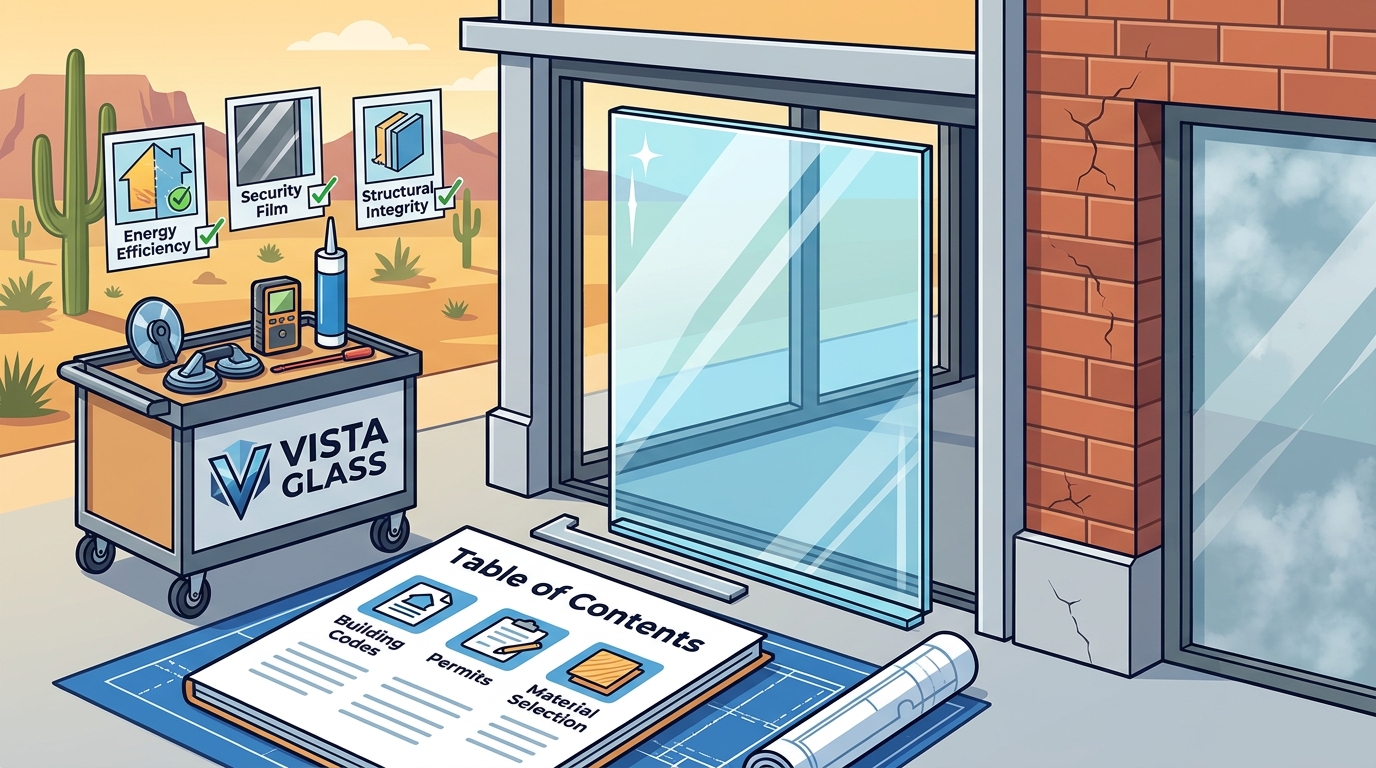
Planning for Minimal Business Disruption
Replacing storefront windows can be disruptive to your daily operations. You need a plan to keep your business open and safe during the installation process. This may involve scheduling the work during off-hours or using temporary barriers to protect customers and staff. A professional team will work efficiently to minimize downtime and ensure your business can continue to operate with minimal interruption.
Key Takeaways
- Inspect existing frames for structural damage before deciding on glass-only replacement.
- Select glass types like tempered or laminated based on your security and safety needs.
- Ensure compliance with Tucson building codes and obtain all necessary permits.
- Invest in energy-efficient glass to reduce cooling costs in the local climate.
- Plan the installation schedule to minimize disruption to your business operations.
- Work with a licensed and insured contractor to ensure quality and safety.
Frequently Asked Questions
How long does storefront window replacement take?
The duration depends on the size of the project and the complexity of the installation. A standard single-pane replacement can take a few hours, while a full storefront overhaul may take several days. A professional contractor will provide a detailed timeline during the initial estimate.
Can I keep my existing window frames?
You can keep existing frames if they are in good structural condition. However, if the frames are damaged or outdated, replacing them along with the glass is often more cost-effective in the long run. A professional assessment will help you make this decision.
Is tempered glass required for storefronts?
Building codes often require tempered or laminated glass for storefronts due to safety concerns. Tempered glass is a common choice because it is strong and shatters safely. Always check local regulations to ensure compliance.
How much does storefront window replacement cost?
Costs vary based on the size of the windows, the type of glass, and the complexity of the installation. Factors like energy efficiency features and custom designs can also impact the price. It is best to get multiple quotes from licensed contractors for an accurate estimate.
Do I need a permit for this project?
Yes, most commercial window replacements require a permit. This ensures that the work meets local building codes and safety standards. Your contractor should handle the permit application process for you.
What is the difference between tempered and laminated glass?
Tempered glass is heat-treated to be stronger and shatters into small pieces. Laminated glass consists of two or more layers of glass bonded with a plastic interlayer, which holds together when broken. Laminated glass offers higher security, while tempered glass is often more affordable.
Can I replace windows while my business is open?
Yes, it is possible to replace windows while your business is open. Contractors can use temporary barriers and schedule work during off-hours to minimize disruption. Communication with your contractor is key to ensuring a smooth process.