
Common Mistakes When Getting Vehicle Window Tint in Tucson and How to Avoid Them
Living in the Sonoran Desert means your vehicle is exposed to extreme heat and intense ultraviolet radiation year-round. According to the U.S. Department of Energy, solar heat gain through windows can account for up to 76% of the heat entering a parked car. This statistic highlights why professional window tinting is not just a cosmetic upgrade but a critical functional necessity for Tucson drivers. Without proper installation, you risk damaging your interior, overheating your cabin, and wasting energy on air conditioning. This guide details the most frequent errors drivers make when selecting and installing window tint, ensuring you protect your investment and maintain visibility.
Understanding Arizona Window Tint Laws
One of the most costly mistakes drivers make is ignoring state-specific regulations. Arizona has strict laws regarding Visible Light Transmission (VLT) percentages. Violating these codes can result in fines, mandatory removal of the tint, and failed vehicle inspections. It is essential to understand that these laws apply differently to sedans, SUVs, and trucks.
Legal Limits for Sedans
For passenger sedans, Arizona law requires that the top four inches of the windshield remain untinted. The front side windows must allow at least 33% of light to pass through. The rear side windows and the rear window can be tinted to any darkness level. This distinction is crucial because many drivers assume they can darken all windows equally, leading to legal complications.
Rules for SUVs and Trucks
Vehicles classified as SUVs or trucks have more lenient regulations. The front side windows must still allow 33% light transmission, but the rear side and rear windows can be tinted to any darkness. This flexibility allows for greater privacy and heat rejection in larger vehicles. However, medical exemptions exist for darker tints, requiring proper documentation from a healthcare provider.
Ignoring these legal boundaries is a primary error. Always verify current statutes before purchasing tint. Professional installers like those at Vista Glass stay updated on local codes to ensure your vehicle remains compliant while maximizing performance.
Choosing the Right Tint Material
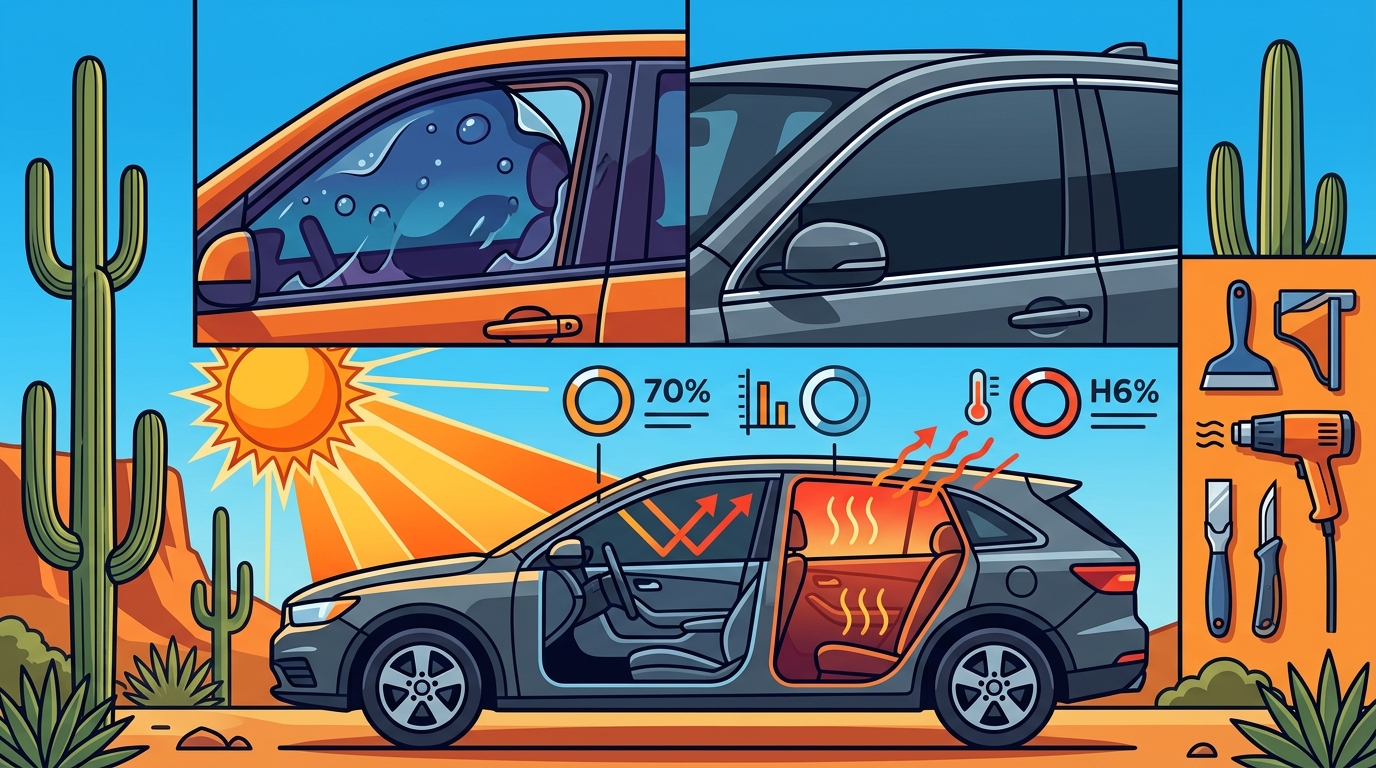
Not all window films are created equal. The second major mistake is selecting a low-quality film based solely on price. In Tucson's climate, inferior films often fail prematurely, turning purple or bubbling within months. Understanding the differences between dyed, metalized, and ceramic films is vital for long-term satisfaction.
Dyed Window Tint
Dyed tint is the most affordable option. It consists of a layer of dye sandwiched between an adhesive and a protective coating. While it provides privacy and reduces glare, it offers minimal heat rejection. In Tucson, where temperatures frequently exceed 100 degrees Fahrenheit, dyed tint may not provide sufficient thermal protection. Additionally, dyed films are prone to fading and discoloration over time.
Metalized Window Tint
Metalized tint contains tiny metallic particles that reflect heat and UV rays. This material is durable and does not fade. However, the metallic content can interfere with electronic signals, including GPS, radio, and cell phone reception. If you rely heavily on navigation or mobile connectivity, this interference can be a significant drawback.
Ceramic Window Tint
Ceramic tint is the premium choice for desert climates. It uses non-conductive ceramic particles to block heat without interfering with electronics. Ceramic films offer superior heat rejection, often blocking up to 99% of UV rays. They also maintain clarity and do not fade. While the upfront cost is higher, the longevity and performance make it the most cost-effective solution for Tucson drivers.
Choosing the wrong material is a common error. Assess your priorities regarding heat rejection, signal interference, and budget. For optimal performance in Arizona, ceramic tint is generally the recommended standard for both comfort and durability.
Critical Installation Errors to Avoid
Even the best tint film can fail if installed incorrectly. The installation process requires precision, specialized tools, and a dust-free environment. DIY kits often lead to visible imperfections that compromise both aesthetics and function.
Poor Edge Trimming
One of the most visible mistakes is improper edge trimming. If the film is cut too short, it leaves a visible gap that allows light to leak in, reducing the tint's effectiveness. If it is cut too long, it can peel up or interfere with window mechanisms. Professional installers use precise cutting techniques to ensure a seamless fit that follows the glass curvature perfectly.
Contamination During Application
Dust, hair, or debris trapped under the film creates permanent bubbles or bumps. This error is often caused by working in an uncontrolled environment. Professional shops use clean rooms or water-fed spray techniques to minimize contamination. Attempting to install tint in a dusty garage or driveway significantly increases the risk of these defects.
Incorrect Adhesion
If the glass is not thoroughly cleaned before application, the adhesive will not bond correctly. This leads to peeling, bubbling, or delamination over time. Proper preparation involves removing all old adhesive, dirt, and oils from the glass surface. This step is critical for ensuring the film lasts for years rather than months.
Avoiding these installation errors requires professional expertise. Skilled technicians at Vista Glass Window Tinting utilize advanced tools and controlled environments to guarantee a flawless finish that enhances both safety and style.
Post-Installation Care Mistakes
Many drivers make the mistake of neglecting post-installation care. The curing process is critical for the adhesive to bond fully with the glass. Ignoring care instructions can ruin the installation before it even begins.
Rolling Down Windows Too Soon
After installation, the tint needs time to cure. This process can take anywhere from a few days to several weeks, depending on the film type and weather conditions. Rolling down the windows during this period can cause the film to shift, peel, or develop bubbles. It is essential to keep windows up until the installer confirms the curing is complete.
Using Ammonia-Based Cleaners
Cleaning the tinted windows with ammonia-based products is a common error. Ammonia can break down the adhesive and cause the film to discolor or peel. Always use ammonia-free glass cleaners and soft, non-abrasive cloths. Harsh chemicals degrade the tint's integrity and shorten its lifespan.
Ignoring Early Signs of Damage
Small bubbles or peeling edges should be addressed immediately. Ignoring these signs can lead to larger areas of failure. If you notice any issues, contact your installer promptly. Professional repair or replacement is often possible if caught early, saving you from the cost of a full reinstallation.
Proper maintenance ensures your tint performs optimally for years. Follow the care guidelines provided by your installer to protect your investment and maintain clear visibility.
Selecting the Right Service Provider
Choosing an unqualified installer is perhaps the most significant mistake. Not all shops have the expertise to handle complex vehicle curves or high-performance films. The quality of the installation directly impacts the longevity and appearance of the tint.
Experience and Reputation
Look for installers with a proven track record in the industry. Years of experience often correlate with better techniques and problem-solving abilities. Check reviews and testimonials to gauge customer satisfaction. A reputable company will stand behind its work with warranties and responsive customer service.
Warranty Coverage
A strong warranty is a sign of confidence in the product and installation. Reputable providers offer warranties that cover bubbling, peeling, and discoloration. Ensure you understand the terms and conditions of the warranty. Voiding the warranty through improper care or unauthorized removal is a common pitfall.
Product Knowledge
A knowledgeable installer will educate you on the benefits of different films and help you make an informed decision. They should be able to explain the differences in heat rejection, UV protection, and durability. Avoid shops that push a single product without considering your specific needs.
At Vista Glass, we combine decades of experience with premium materials to deliver superior window tinting services. Our team is dedicated to ensuring your vehicle looks great and performs well in the harsh Tucson climate.
Key Takeaways
- Legal Compliance: Always verify Arizona's VLT laws for your specific vehicle type to avoid fines and mandatory removal.
- Material Choice: Ceramic tint offers the best heat rejection and durability for Tucson's extreme temperatures without signal interference.
- Professional Installation: Avoid DIY kits; professional installation ensures precise cutting and a dust-free application for a flawless finish.
- Curing Period: Do not roll down windows for the recommended curing time to prevent peeling and bubbling.
- Cleaner Selection: Use only ammonia-free cleaners to protect the tint's adhesive and prevent discoloration.
- Vendor Reputation: Choose an experienced provider like Vista Glass that offers strong warranties and expert guidance.
- UV Protection: High-quality tint blocks up to 99% of UV rays, protecting your skin and preventing interior fading.
Frequently Asked Questions
How long does window tint last in Tucson?
High-quality ceramic tint can last 10 to 15 years or more. Lower-quality dyed films may fade or peel within a few years due to the intense sun exposure.
Can I tint my windshield in Arizona?
You can apply a tint strip to the top four inches of your windshield. Full windshield tinting is generally not legal for passenger vehicles unless a medical exemption is obtained.
Does window tint interfere with GPS or cell signals?
Metalized tint can interfere with electronic signals. Ceramic tint does not contain metal and will not interfere with GPS, radio, or cell phone reception.
How long do I have to wait before rolling down my windows?
Wait at least three to five days for standard films, but up to three weeks for ceramic tint, depending on humidity and temperature. Your installer will provide specific guidance.
Is window tint worth it in a hot climate?
Yes, tint significantly reduces interior heat, improves comfort, and protects your dashboard and upholstery from UV damage. It also enhances privacy and safety.
What is the best tint darkness for Tucson?
While darker tints offer more privacy, they must comply with legal VLT limits. For front windows, 20% to 35% VLT is common. Rear windows can be darker, such as 5% or 20%, depending on your preference and legal allowances.
How do I clean my tinted windows?
Use a soft microfiber cloth and an ammonia-free glass cleaner. Avoid abrasive sponges or harsh chemicals that can damage the film's adhesive or surface.
What is the difference between window tint and ceramic coating?
Window tint is a film applied to the glass to block heat and UV rays. Ceramic coating is typically a liquid applied to the exterior of the vehicle's paint to protect against scratches and contaminants. They serve different purposes but can be used together for comprehensive protection.
Contact Vista Glass for Professional Tinting
Avoid the common pitfalls of DIY tinting and unqualified installers. Trust the experts at Vista Glass to provide premium window tinting services tailored to Tucson's unique climate. Our team uses high-grade ceramic films and precise installation techniques to ensure your vehicle looks great and stays cool. Contact us today to schedule your appointment and experience the difference professional service makes.