

Commercial property owners in Tucson face unique environmental challenges that directly impact building integrity and customer safety. According to recent industry data, tempered glass reduces the risk of severe injury from breakage by up to 90 percent compared to standard annealed glass. This statistic highlights why modern commercial storefronts increasingly prioritize safety compliance over cost savings. Vista Glass understands that a storefront is the first point of contact for your business, making the choice of glazing material critical for both aesthetic appeal and structural resilience. (About Vista Glass)
Safety and Regulatory Compliance
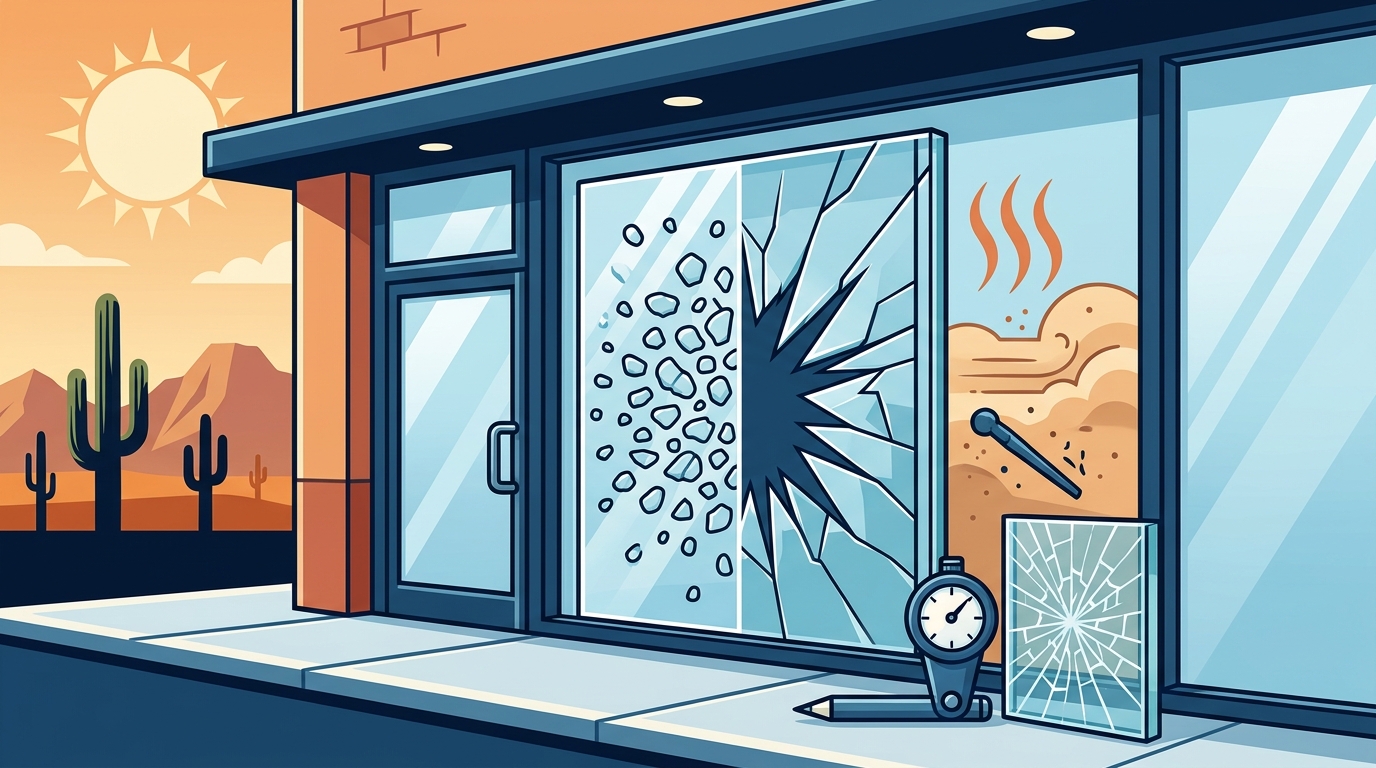
The primary benefit of using tempered glass for commercial storefronts is its enhanced safety profile. Tempered glass is a type of safety glass processed by controlled thermal or chemical treatments to increase its strength compared with normal glass. When tempered glass breaks, it shatters into small, granular chunks rather than sharp, jagged shards. This characteristic significantly reduces the likelihood of laceration injuries to customers and employees. (Home Vista Glass)
Building codes in many jurisdictions, including areas within Pima County, mandate the use of safety glass in hazardous locations such as commercial entrances and large windows. Vista Glass ensures that all commercial installations meet these strict regulatory standards. By choosing tempered glass, business owners avoid potential legal liabilities and ensure their properties pass safety inspections without delay. (Blog Vista Glass)
Furthermore, the structural integrity of tempered glass provides an additional layer of security. While not bulletproof, its resistance to impact makes it harder for intruders to gain entry through the glass. This deterrent effect is crucial for retail spaces and offices located in high-traffic areas of Tucson. (Location Vista Glass)
Durability in the Arizona Climate
Tucson experiences extreme temperature fluctuations, intense UV radiation, and occasional severe weather events. Standard glass is susceptible to thermal stress, which can cause spontaneous cracking when exposed to rapid temperature changes. Tempered glass is engineered to withstand these thermal stresses far better than regular glass.
The manufacturing process involves heating the glass to approximately 620 degrees Celsius and then rapidly cooling it. This process creates compressive stresses on the surface and tensile stresses in the center, resulting in a material that is four to five times stronger than annealed glass. For commercial buildings in the Sonoran Desert, this durability translates to fewer replacements and lower maintenance costs over time.
Additionally, tempered glass is more resistant to wind pressure and physical impacts from debris during storms. Vista Glass specializes in installing glass solutions that can withstand the specific environmental demands of the region. Our team assesses each property to recommend the appropriate thickness and type of tempered glass based on local wind load requirements.
Energy Efficiency and Thermal Performance
Energy costs are a significant operational expense for commercial properties. Tempered glass can be further processed to include low-emissivity (Low-E) coatings or insulated glass units (IGUs). These enhancements improve the thermal performance of the storefront, reducing heat gain during the hot Arizona summers and heat loss during cooler winter nights.
According to energy efficiency reports, buildings with high-performance glazing can reduce HVAC energy consumption by up to 30 percent. This reduction not only lowers utility bills but also contributes to a more comfortable indoor environment for customers and staff. Improved thermal comfort can lead to increased customer dwell time and higher sales conversion rates for retail businesses.
Vista Glass offers advanced window tinting and insulated glass options that complement tempered glass installations. Our technicians work with property managers to select glazing solutions that balance natural light transmission with thermal insulation. This holistic approach ensures that the storefront meets both safety and energy efficiency goals.
Aesthetic Flexibility and Design
Modern commercial architecture often demands large, uninterrupted glass panels to create an open and inviting atmosphere. Tempered glass allows for larger pane sizes because of its superior strength. This flexibility enables architects and business owners to design storefronts that maximize visibility and natural light.
Tempered glass is also available in various finishes, including clear, tinted, and reflective options. These variations allow for customization to match the brand identity of the business. For example, a high-end boutique might choose a subtle tint to enhance privacy, while a tech startup might prefer clear glass to convey transparency and innovation.
The clarity of tempered glass ensures that the interior of the business remains visible from the outside, which is a powerful marketing tool. A well-designed storefront acts as a silent salesman, attracting foot traffic and reinforcing brand presence. Vista Glass provides expert consultation to help businesses choose the right aesthetic options that align with their commercial goals.
Long-Term Cost Analysis
While the initial cost of tempered glass may be slightly higher than that of standard glass, the long-term savings are substantial. The durability of tempered glass reduces the frequency of replacements due to breakage or thermal stress. This longevity translates to lower lifecycle costs for the property owner.
Moreover, the safety benefits of tempered glass can lead to reduced insurance premiums. Many insurance providers offer discounts for properties that utilize safety glass in hazardous locations. This financial incentive further offsets the initial investment.
When considering the total cost of ownership, the benefits of tempered glass become even more apparent. The combination of reduced maintenance, energy savings, and potential insurance discounts makes it a financially sound choice for commercial storefronts. Vista Glass provides transparent pricing and detailed quotes to help businesses understand the value proposition of tempered glass installations.
Key Takeaways
- Safety First: Tempered glass shatters into small, blunt pieces, reducing injury risk by up to 90 percent.
- Climate Resilience: Engineered to withstand thermal stress and wind loads common in Tucson's desert environment.
- Code Compliance: Meets or exceeds local building codes for safety glass in commercial hazardous locations.
- Energy Savings: Compatible with Low-E coatings and IGUs to reduce HVAC costs by up to 30 percent.
- Design Versatility: Allows for larger panes and various tints to enhance brand aesthetics and visibility.
- Cost Efficiency: Lower lifecycle costs due to durability and potential insurance premium reductions.
- Professional Installation: Requires expert handling to maintain integrity, a service provided by Vista Glass.
Frequently Asked Questions
Is tempered glass required by law for commercial storefronts?
Yes, building codes in many areas, including parts of Pima County, require safety glass in hazardous locations such as commercial entrances and large windows. Tempered glass is a common solution to meet these requirements.
How does tempered glass differ from laminated glass?
Tempered glass is heat-treated to increase strength and shatters into small chunks. Laminated glass consists of two layers of glass bonded with a plastic interlayer, holding together when broken. Both offer safety benefits, but tempered glass is often preferred for its cost-effectiveness and strength.
Can tempered glass be cut after it has been tempered?
No, tempered glass cannot be cut, drilled, or edged after the tempering process. All dimensions and cuts must be specified before the glass is tempered. This is why professional measurement and installation are critical.
Does tempered glass provide UV protection?
Standard tempered glass does not block all UV rays, but it can be coated with Low-E or tinted to provide significant UV protection. This helps prevent fading of interior furnishings and improves energy efficiency.
How long does tempered glass last?
Tempered glass is highly durable and can last the lifetime of the building if installed correctly. Its resistance to thermal stress and physical impact makes it a long-term investment for commercial properties.
What should I do if my tempered glass breaks?
If tempered glass breaks, it shatters into small, relatively harmless pieces. However, it should be cleaned up immediately to prevent tripping hazards. Contact a professional glass service like Vista Glass for replacement and inspection.
Is tempered glass more expensive than regular glass?
Tempered glass is typically more expensive upfront than regular annealed glass. However, the long-term benefits of durability, safety, and energy efficiency often result in lower total costs over time.
Contact Vista Glass
Ready to upgrade your commercial storefront with the safety and durability of tempered glass? Vista Glass is Tucson's trusted partner for commercial glass solutions. Our team of experts is ready to assess your needs and provide a customized installation plan. Contact us today at 520-744-7766 or visit our Contact Us page to schedule a consultation. Trust Vista Glass for professional service and quality you can count on.