

Driving through the intense heat of Southern Arizona places unique stress on vehicle glass. According to recent automotive safety data, over 13 million windshield repairs are performed annually in the United States, saving drivers billions of dollars compared to full replacements. However, not every crack qualifies for this cost-effective solution. Understanding the precise threshold between a simple fix and a mandatory replacement is critical for maintaining both your vehicle's structural integrity and your personal safety. (About Vista Glass)
Diagnostic Parameters for Repair Viability
The decision to repair or replace a windshield hinges on specific physical metrics. Glass technicians evaluate the size, depth, and location of the damage to determine if a repair is structurally sound. A cracked windshield is a compromised barrier that requires immediate attention to prevent further deterioration. (Location Vista Glass)
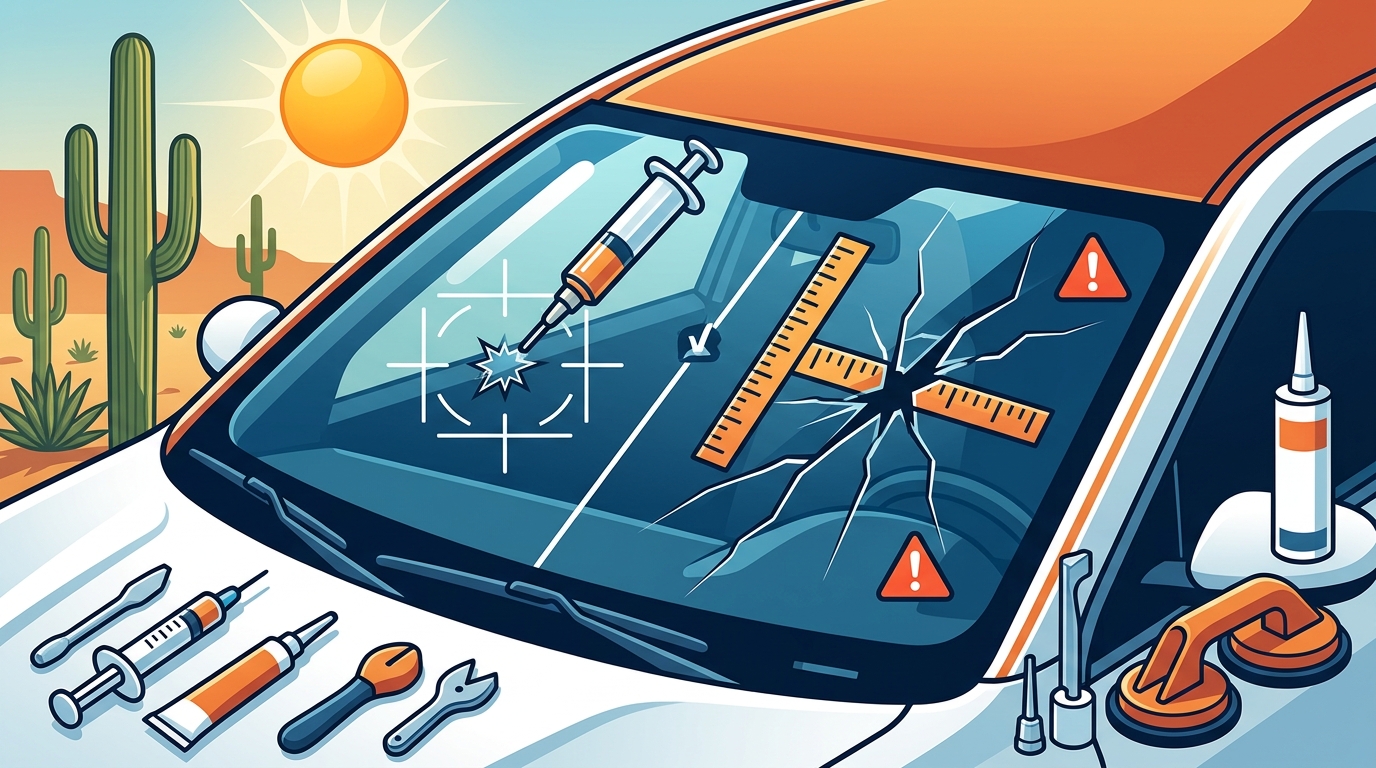
Windshield repair is defined as the process of injecting a specialized resin into a chip or crack to restore clarity and structural bonding. This method is generally viable for minor damage. The industry standard for repairability typically limits the damage to a diameter of three inches or less. If the crack exceeds this length, the resin cannot adequately bridge the gap, and the structural integrity remains compromised.
Depth is another critical factor. The windshield is a laminated safety glass consisting of two layers of glass with a plastic interlayer. If the damage penetrates through both layers of glass, a repair is impossible. The resin cannot bond effectively to the inner layer, leaving the structural weakness intact. Therefore, surface-level chips and shallow cracks are prime candidates for restoration.
The location of the damage also dictates the outcome. Damage in the driver's primary line of sight is often treated with extreme caution. While modern repair techniques can make chips nearly invisible, any distortion in the critical viewing area can cause glare or visual impairment. Technicians may recommend replacement if the repair cannot guarantee optical clarity in this zone.
When Replacement Becomes Mandatory
There are specific scenarios where repair is not an option, and full windshield replacement is the only safe path. Recognizing these signs early can prevent further damage to your vehicle's frame or sensor systems.
Long cracks are the most common indicator for replacement. If a crack extends beyond three inches, it is considered too large for a standard repair. The resin cannot fill the void completely, leading to air bubbles and weak points. These weak points will likely expand under the stress of driving, vibration, or temperature changes.
Edge damage is another critical factor. Cracks that start within two inches of the windshield edge compromise the bond between the glass and the vehicle frame. This bond is essential for the windshield's role in roof support during a rollover accident. Replacing the glass ensures that the new adhesive bond is uniform and secure.
Complex crack patterns, such as bullseyes, star breaks, or combination breaks, may also require replacement. While small bullseyes can sometimes be repaired, larger or more complex patterns disrupt the glass structure significantly. If the damage involves multiple layers or extends into the plastic interlayer, the structural integrity is lost.
Additionally, damage near the camera or sensor housing requires precision. Modern vehicles rely on windshields for Advanced Driver Assistance Systems (ADAS). If the damage interferes with these sensors, replacement is necessary to ensure proper calibration and functionality.
The Impact of Tucson Climate on Glass Integrity
Living in Tucson presents unique challenges for vehicle glass. The region experiences extreme temperature fluctuations, with daytime highs often exceeding 100 degrees Fahrenheit and cooler nights. These thermal cycles cause the glass to expand and contract repeatedly.
Thermal stress is defined as the strain placed on a material due to rapid or extreme temperature changes. In a cracked windshield, thermal stress can cause a small chip to rapidly expand into a large crack. A minor chip that might have been repairable in a temperate climate can become irreparable in the desert heat.
UV radiation is another significant factor. Prolonged exposure to intense sunlight can degrade the adhesive used in windshield repairs. If a repair is attempted in high heat without proper curing conditions, the bond may fail prematurely. Professional technicians use specialized tools to control the curing process, ensuring the resin withstands the local climate.
Vista Glass has served the Cochise and Pima County communities for over two decades. Our experience with local weather patterns allows us to provide accurate assessments of damage viability. We understand how the desert environment affects glass and can advise on the best course of action for your specific situation.
Comparison: Repair vs. Replacement
Understanding the differences between repair and replacement helps in making an informed decision. Each option has distinct advantages and limitations based on the damage type.
| Feature | Windshield Repair | Windshield Replacement |
|---|---|---|
| Cost | Low to Moderate | High |
| Time Required | 30 to 60 Minutes | 1 to 2 Hours |
| Structural Integrity | Restored for Minor Damage | Fully Restored |
| Optical Clarity | High (for small chips) | Perfect |
| ADAS Calibration | Not Required | Often Required |
| Damage Limit | Under 3 Inches | Any Size |
Repair is generally more cost-effective and faster. It preserves the original factory glass, which is often preferred by vehicle manufacturers. However, replacement is necessary for severe damage. It ensures that the vehicle meets all safety standards and provides a new, unblemished surface.
Safety and Legal Implications
A compromised windshield is not just an aesthetic issue. It is a critical safety component. The windshield provides up to 45% of the structural strength in the front of the vehicle and 60% in the rear during a rollover accident. It also supports the deployment of airbags. If the windshield fails during an accident, the airbag may not deploy correctly, increasing the risk of injury.
Legal requirements also mandate clear visibility. Driving with a cracked windshield that obstructs the driver's view can result in fines and penalties. In Arizona, vehicle codes emphasize the importance of maintaining safe operating conditions. Ignoring a crack can lead to further damage, making the eventual repair or replacement more expensive.
Insurance coverage often plays a role in the decision. Many comprehensive insurance policies cover windshield repair with zero deductible. Replacement may also be covered, but deductibles can apply. It is advisable to check with your insurance provider before proceeding. Vista Glass can assist in navigating these details to ensure you receive the best service.
Key Takeaways
- Repair is viable for chips under three inches and shallow cracks.
- Replacement is mandatory for cracks longer than three inches or those touching the edge.
- Tucson's extreme heat can cause minor chips to expand rapidly into large cracks.
- Windshield repair is defined as injecting resin to restore clarity and bonding.
- Thermal stress is the strain on glass from temperature fluctuations, worsening cracks.
- Vista Glass has served Cochise and Pima County since 2000 with expert technicians.
- Professional assessment is crucial to determine the correct course of action.
Frequently Asked Questions
How long does a windshield repair take?
A standard windshield repair typically takes between 30 to 60 minutes. This includes the time for resin injection and curing. Replacement takes longer, usually one to two hours, to ensure proper adhesive setting.
Can I drive with a cracked windshield?
You can drive with a minor crack, but it is not recommended. The crack can spread due to temperature changes or road vibrations. It is best to have it assessed and repaired or replaced as soon as possible.
Does Vista Glass offer mobile service?
Yes, Vista Glass provides professional windshield replacement and repair services. We prioritize convenience and safety for our customers in Tucson and surrounding areas.
What is the difference between a chip and a crack?
A chip is a small, localized damage point, often caused by a rock impact. A crack is a linear fracture that extends across the glass. Chips are more likely to be repairable, while long cracks usually require replacement.
Will my insurance cover the cost?
Many insurance policies cover windshield repair with no deductible. Replacement coverage varies by policy. It is advisable to contact your insurance provider to understand your specific coverage.
How does heat affect windshield damage?
Heat causes glass to expand. In a cracked windshield, this expansion can widen the crack, making repair impossible. Prompt attention is essential in hot climates like Tucson.
Why choose Vista Glass for windshield service?
Vista Glass is a fully licensed, bonded, and insured company with over 20 years of experience. We use high-quality materials and advanced techniques to ensure durable and safe repairs.
Contact Vista Glass for Professional Service
Do not wait for a small chip to become a major crack. If you are unsure whether your windshield can be repaired, contact Vista Glass for a professional assessment. Our team of experts is ready to help you restore safety and clarity to your vehicle. Call us today at 520-744-7766 or visit our Contact Us page to schedule an appointment. We serve Tucson, Cochise, and Pima County with reliable, high-quality service.