
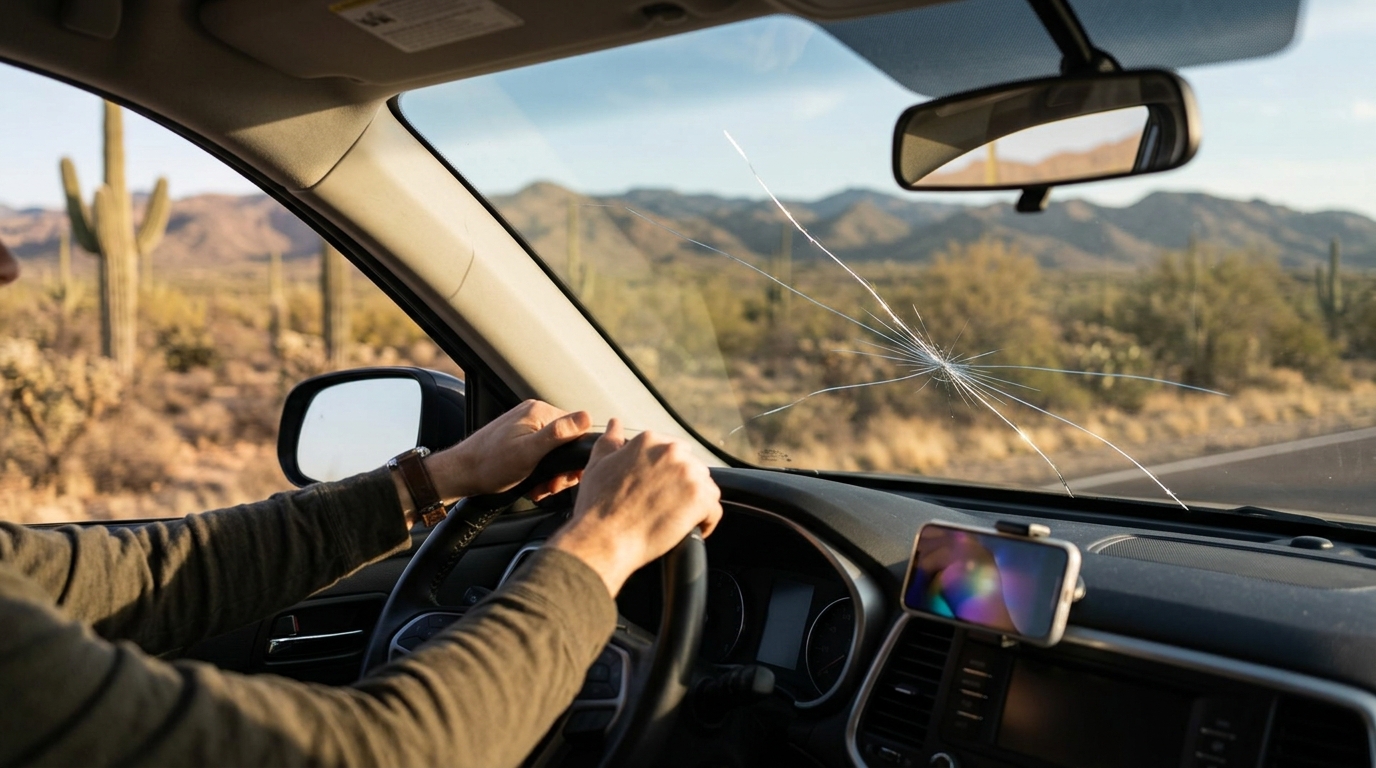
Driving through the high desert sun of Southern Arizona subjects your vehicle to extreme thermal stress. According to industry data, temperature fluctuations in regions like Tucson can cause glass to expand and contract rapidly, leading to spontaneous cracks or the rapid propagation of existing chips. This environmental factor makes timely assessment critical for maintaining vehicle safety and structural integrity. Ignoring minor damage often results in costly full replacements that could have been avoided with immediate professional intervention. (About Vista Glass)
Diagnostic Criteria: When to Repair
Not every imperfection on your windshield requires a full replacement. Understanding the specific characteristics of the damage is the first step in determining the correct solution. The general rule of thumb in the auto glass industry is that small, superficial damage can often be restored to near-original clarity and strength. (Home Vista Glass)
The Size Limitation
Repair is typically viable when the damage is contained within a small area. Most professional technicians can successfully repair chips smaller than a quarter and cracks shorter than three inches. If the damage exceeds these dimensions, the structural integrity of the glass is usually compromised beyond repair. Vista Glass utilizes advanced diagnostic tools to measure the depth and spread of the fracture accurately. (Blog Vista Glass)
The Location Factor
Location is perhaps the most critical factor in the repair decision. Damage located in the driver's primary line of sight can often be repaired, but it requires extreme precision to avoid optical distortion. If the crack extends to the very edge of the windshield, repair is generally not recommended. Edge cracks compromise the bonding seal and can quickly spread due to vehicle vibration and thermal stress. (Location Vista Glass)
Depth of the Damage
Windshields are laminated safety glass, consisting of two layers of glass with a plastic interlayer. If the crack penetrates through both layers of glass, repair is impossible. The structural bond is broken, and the glass can no longer provide the necessary support during a collision or rollover event.
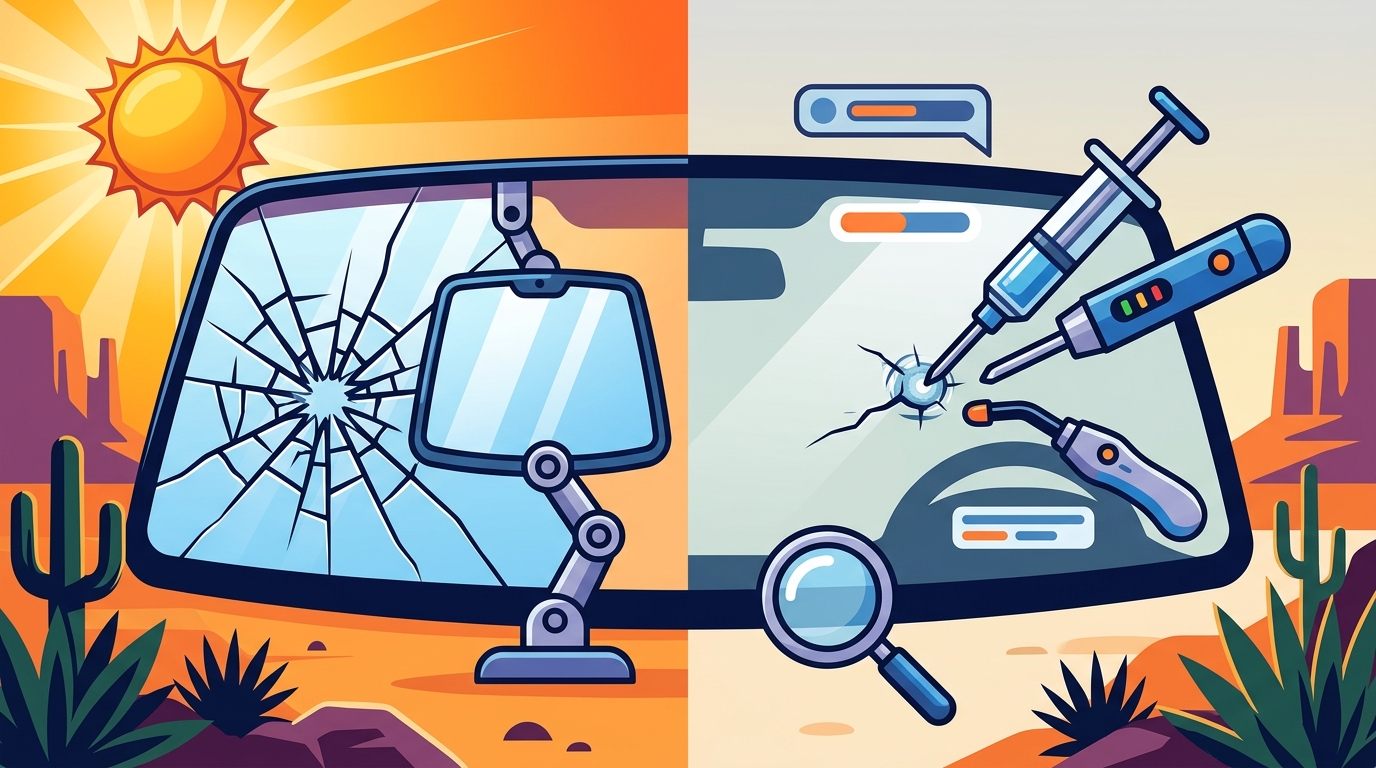
When Replacement is Mandatory
There are specific scenarios where replacement is the only safe and legal option. Attempting to repair damage in these situations can lead to further cracking, poor visibility, and potential liability issues.
Long or Complex Cracks
Cracks longer than three inches, or those with complex branching patterns (often called "star breaks"), cannot be effectively repaired. The resin used in repairs cannot fill large voids or stop the propagation of long fractures. In these cases, the windshield must be replaced to ensure the vehicle meets safety standards.
Damage in the Driver's View
While small chips in the driver's line of sight can sometimes be repaired, large cracks or those directly in front of the driver's eyes require replacement. Any residual distortion or haze from a repair in this critical zone can impair vision and create a safety hazard. Precision is paramount, and if the damage is too large, replacement is the only responsible choice.
Edge Damage
Cracks that start or extend to the edge of the windshield compromise the structural bond between the glass and the vehicle frame. This bond is essential for the proper deployment of airbags and the roof's structural support during a rollover. Edge damage always necessitates a full replacement.
The Professional Repair Process
Professional windshield repair is a precise scientific process, not a simple glue application. It involves removing air and moisture from the fracture and replacing them with a specialized UV-curing resin.
Step 1: Assessment and Cleaning
The technician first assesses the damage to ensure it is repairable. The area is then thoroughly cleaned to remove any dirt, moisture, or debris. This step is crucial because any contamination left in the crack will prevent the resin from bonding properly, leading to a failed repair.
Step 2: Resin Injection
A specialized bridge tool is placed over the damage. This tool creates a vacuum to pull air out of the crack and then injects the high-clarity resin under pressure. The resin fills every microscopic crevice of the fracture, restoring the glass's structural continuity.
Step 3: Curing and Polishing
Once the resin has filled the crack, a UV light is used to cure and harden the material. This process typically takes only a few minutes. The technician then polishes the surface to remove any excess resin, leaving the repair nearly invisible and restoring clarity.
Safety and Structural Implications
The windshield is not just a window; it is a critical safety component. It provides up to 45% of the structural strength in a frontal collision and up to 60% in a rollover. A compromised windshield can fail to support the roof or properly deploy airbags.
Airbag Deployment
In many vehicles, the passenger-side airbag deploys by bouncing off the underside of the windshield. If the windshield is weakened or improperly installed, the airbag may deploy incorrectly, failing to protect the passenger or even causing injury. This is why proper installation and adhesive curing times are non-negotiable.
Water and Air Leaks
Cracks and chips can compromise the seal of the windshield, leading to water leaks into the vehicle's interior. This can cause mold growth, electrical issues, and damage to upholstery. Timely repair or replacement prevents these secondary damages and maintains the vehicle's interior integrity.
Cost Analysis: Repair vs. Replace
Understanding the cost difference between repair and replacement helps in making an informed financial decision. Repair is significantly more affordable and is often covered by comprehensive insurance with no deductible.
| Service Type | Typical Cost Range | Insurance Coverage | Time Required |
|---|---|---|---|
| Chip Repair | $50 - $100 | Often $0 Deductible | 30-60 Minutes |
| Crack Repair | $75 - $150 | Often $0 Deductible | 45-90 Minutes |
| Full Replacement | $200 - $600+ | May Apply Deductible | 1-2 Hours |
At Vista Glass, we prioritize transparency in pricing. We offer competitive rates for both repair and replacement services, ensuring that safety is never compromised by cost concerns. Our team can provide an exact quote after a thorough inspection of your vehicle.
Key Takeaways
- Chips smaller than a quarter and cracks under three inches are often repairable.
- Damage in the driver's line of sight requires extreme precision or replacement.
- Edge cracks compromise structural integrity and always require replacement.
- Windshield repair is significantly cheaper and faster than full replacement.
- Timely action prevents small chips from spreading into large, unrepairable cracks.
- The windshield provides critical structural support for airbag deployment and roof stability.
- Vista Glass offers 24/7 emergency service for urgent glass issues in Tucson.
Frequently Asked Questions
How long does a windshield repair take?
A standard windshield repair typically takes between 30 to 60 minutes. This includes the time for assessment, cleaning, resin injection, and UV curing. The vehicle can usually be driven immediately after the service is complete.
Can I drive with a cracked windshield?
While you may be able to drive with a minor crack, it is not recommended. Cracks can spread rapidly due to temperature changes or road vibrations, potentially obstructing your view or compromising safety. It is best to have the damage assessed and repaired as soon as possible.
Does insurance cover windshield repair?
Many comprehensive insurance policies cover windshield repair with little or no deductible. This is because repair is cost-effective and prevents the need for a more expensive replacement. It is advisable to check with your insurance provider to confirm your specific coverage.
What is the difference between a chip and a crack?
A chip is a small, localized area of damage, often caused by a rock or debris. A crack is a longer, linear fracture that can spread across the glass. Chips are more likely to be repairable, while longer cracks often require replacement.
How long do I have to wait before driving after replacement?
After a full windshield replacement, you should wait at least one hour before driving the vehicle. However, it is recommended to avoid car washes and heavy driving for 24 hours to allow the adhesive to fully cure and bond securely.
Can Vista Glass come to me for repair?
Yes, Vista Glass offers mobile windshield repair and replacement services. Our technicians can come to your home or office in the Tucson area, providing convenient and professional service at your location.
What causes windshields to crack spontaneously?
Spontaneous cracking can be caused by thermal stress from extreme temperature changes, existing stress points in the glass, or minor impacts that weaken the structure over time. In Tucson's hot climate, thermal stress is a common contributor to windshield damage.
Contact Vista Glass
Do not wait for a small chip to become a major crack. At Vista Glass, we provide expert windshield repair and replacement services tailored to the unique needs of Tucson drivers. Our team is fully licensed, bonded, and insured, ensuring the highest quality of service and safety. Contact us today to schedule an appointment or to learn more about our services.
Contact Vista Glass Today for professional assistance.