

Replacement windows can improve comfort, curb appeal, security, and energy performance, but installation is only the beginning. A simple maintenance routine helps protect the glass, frame, seals, drainage paths, and operating hardware from premature wear.
For homeowners in Tucson, Arizona, dust, intense ultraviolet exposure, large temperature swings, monsoon rain, and wind-driven debris make routine inspection especially valuable. The good news is that most maintenance takes only a few minutes per window and can help you identify small problems before they become water damage, air leakage, or a complete glass-unit failure.
Build a maintenance plan instead of waiting for a problem
A practical schedule divides window care into three levels:
- Monthly: Look for visible dirt, damaged screens, blocked sill channels, and changes in how each window opens or locks.
- Twice a year: Wash the glass and frames, vacuum tracks, clear drainage openings, inspect seals, and test hardware. Spring and fall are convenient times for Tucson homeowners.
- After severe weather: Check for cracked glass, loose trim, damaged caulking, displaced screens, and water intrusion after monsoon storms or strong winds.
Manufacturers and industry guidance generally identify glass, frame surfaces, drainage systems, seals, and hardware as the main areas requiring periodic care. Keeping each of these components clean and functional supports smoother operation and longer service life. ([fgiaonline.org](https://fgiaonline.org/resources/homeowner-resources/caring-for-your-windows-doors-skylights/?utm_source=openai))
Clean the glass and frame without damaging the finish
Dust and airborne grit can accumulate quickly in the Sonoran Desert. If abrasive particles are rubbed across the glass, they may create fine scratches. Dirt on the sill and frame can also hold moisture against the window assembly.
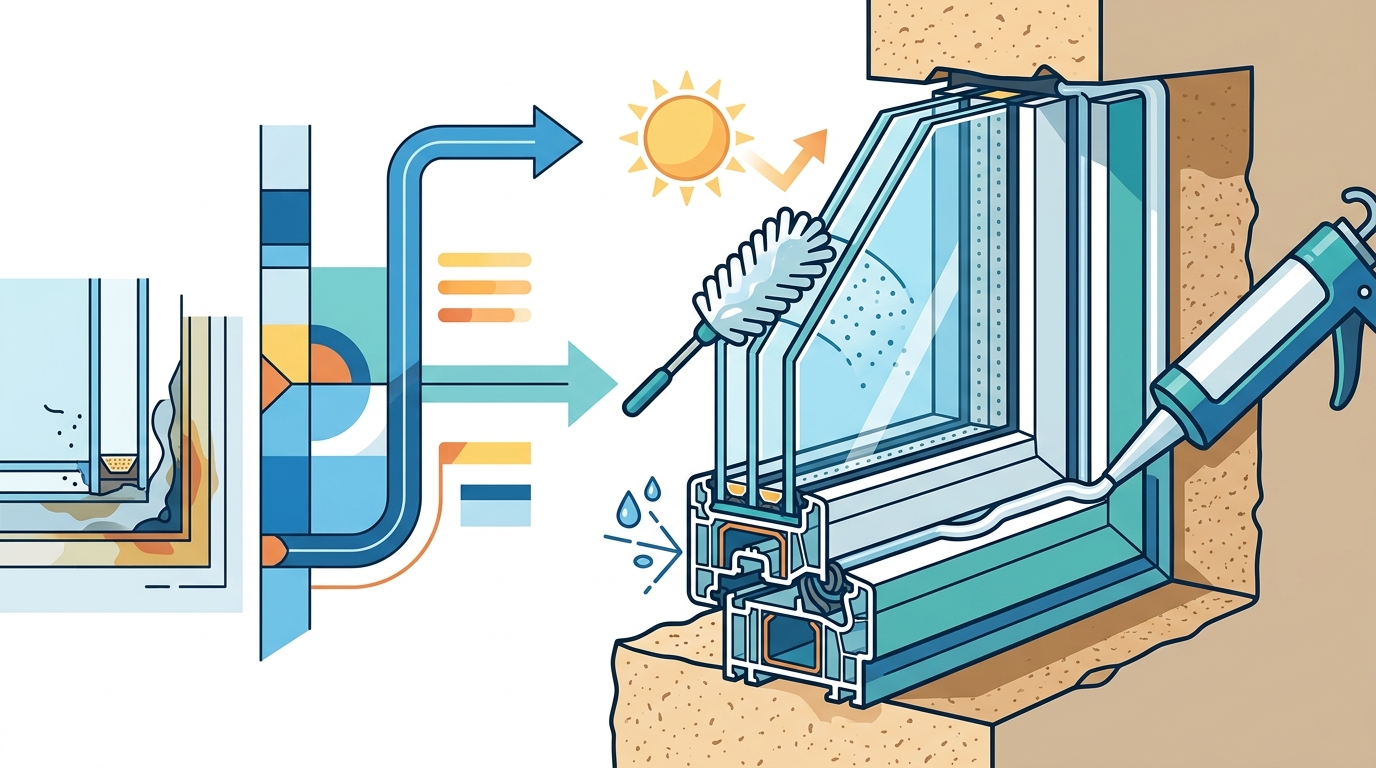
Safe glass-cleaning method
- Remove loose dust with a clean, dry microfiber cloth or a soft brush.
- Mix mild dish soap with warm water, or use a manufacturer-approved glass cleaner.
- Apply the solution with a soft, lint-free cloth or nonabrasive sponge.
- Use a squeegee or clean microfiber cloth to remove water and reduce streaking.
- Dry the edges, corners, sill, and frame so standing water does not remain.
Do not use steel wool, razor blades, abrasive pads, putty knives, caustic chemicals, petroleum-based solvents, or aggressive scrubbing. These products can damage glass coatings, frame finishes, gaskets, or the bond between the glass and frame. If the window has applied tint or film, follow the film manufacturer's cleaning instructions and avoid ammonia unless the manufacturer specifically approves it. FGIA recommends mild, nonabrasive cleaning products and warns that petroleum-based cleaners and solvents can weaken the seal between the glass and frame. ([fgiaonline.org](https://fgiaonline.org/resources/homeowner-resources/caring-for-your-windows-doors-skylights/?utm_source=openai))
Frame and sill care by material
| Material | Routine care | Warning signs |
|---|---|---|
| Vinyl | Wipe with mild detergent and water; rinse and dry. | Cracks, distortion, loose joints, or discoloration. |
| Aluminum | Remove dust and residue with a soft cloth; rinse away cleaning solution. | Corrosion, damaged finish, loose fasteners, or persistent condensation. |
| Wood | Clean gently, dry promptly, and maintain paint or stain. | Soft spots, peeling finish, swelling, cracks, or insect damage. |
Keep water away from interior trim and never use a high-pressure hose around exterior windows. Excess water pressure can drive moisture past seals or into the wall assembly. Exterior surfaces should be rinsed carefully and wiped dry, especially after dusty conditions.
Keep tracks and weep holes clear
Sliding tracks and sill channels collect sand, dead insects, leaves, and other debris. When buildup prevents a sash from moving freely, homeowners may force the window and damage rollers, locks, or the frame.
Track-cleaning steps
- Open the window and inspect the full track length.
- Vacuum loose debris with a brush attachment.
- Use a small, soft brush or damp cloth for remaining buildup.
- Wipe away residue and allow the track to dry completely.
- Operate the window several times before applying any lubricant.
Weep holes are small drainage openings that allow rainwater to leave the frame. They may be located in the interior track area, on the exterior frame, or between stacked window units. Clear them with a dry paintbrush or small soft bottlebrush. Do not enlarge the openings, puncture covers, remove baffles, or force tools into insect screens. Keeping weep holes open is important because blocked drainage can contribute to water buildup and leaks. ([fgiaonline.org](https://fgiaonline.org/resources/homeowner-resources/caring-for-your-windows-doors-skylights/?utm_source=openai))
Do not pour oil into a track or weep hole. Oil-based products can attract dust and may damage drainage components. If a drainage opening appears blocked beyond what gentle brushing can remove, have the window inspected rather than forcing debris deeper into the frame.
Inspect weatherstripping, gaskets, and exterior caulking
Seals create the barrier that limits air and water movement around the sash and frame. Weatherstripping and gaskets naturally age, and Tucson's heat and ultraviolet exposure can accelerate drying, shrinking, brittleness, or cracking.
At least twice a year, look for:
- Cracks, gaps, or missing sections;
- Rubber or vinyl that feels hard, brittle, or loose;
- Peeling or separated caulking around the exterior perimeter;
- Drafts when the window is closed and locked;
- Water staining, damp drywall, peeling paint, or damaged interior trim.
Replace worn weatherstripping with the correct profile recommended by the window manufacturer. A paper test can help identify a loose seal: close the sash on a sheet of paper and gently pull. If the paper slides out with little resistance, the compression seal may need adjustment or replacement. Never block weep holes with caulk.
Small, visible gaps around trim may sometimes be addressed with an appropriate window-and-door sealant, but sealing hidden gaps between a jamb and rough opening is more involved. ENERGY STAR notes that air sealing around windows can improve comfort and efficiency, while foam, backer rod, fiberglass, or caulk must be selected and installed carefully so the frame is not bent or deflected. ([energystar.gov](https://www.energystar.gov/saveathome/seal_insulate/sealing-window-door?utm_source=openai))
Keep locks, rollers, hinges, and operators working smoothly
A replacement window should open, close, and lock without excessive force. Test each unit during your inspection. A sudden change in operation may indicate dirt, a misaligned sash, worn rollers, a loose fastener, frame movement, or a problem with the installation.
Hardware-care process
- Remove visible dirt from hinges, rollers, locks, and operator arms.
- Check that screws and fasteners are present and secure, but do not overtighten them.
- Use only a lubricant approved by the window manufacturer.
- Apply a small amount to moving metal contact points, avoiding glass and weatherstripping.
- Cycle the window several times and wipe away excess product.
Many window manufacturers recommend silicone-based or other dry lubricants for compatible components because heavy oils can attract dust and grime. However, product-specific instructions take priority: some rollers, tracks, locks, and balances require a particular lubricant or no lubricant at all. If the sash still binds after cleaning and proper lubrication, do not keep forcing it. A professional can determine whether adjustment, hardware replacement, frame repair, or glass service is needed.
Adjust your routine for Tucson's climate
Tucson replacement windows face several conditions that affect maintenance:
- Dust and sand: Fine particles settle in tracks and can act like abrasive grit on moving components.
- Heat and ultraviolet exposure: Repeated sun exposure can age exterior caulking, gaskets, finishes, and aftermarket films.
- Monsoon storms: Wind-driven rain makes clear weep holes and intact exterior seals especially important.
- Air conditioning: Indoor cooling can create temperature differences across glass. Condensation is not automatically proof of a failed insulated-glass seal; its location and timing matter.
- Dry indoor air and temperature changes: Framing materials can expand and contract, revealing small gaps or stressing aged sealants.
Condensation on an interior glass surface can occur when humid indoor air reaches a surface below its dew point. ENERGY STAR recommends controlling indoor humidity, using kitchen and bathroom exhaust fans, venting dryers outdoors, and allowing air to circulate across the window. Exterior condensation can also occur in warm, humid conditions when air conditioning cools the glass. ([fgiaonline.org](https://fgiaonline.org/resources/homeowner-resources/caring-for-your-windows-doors-skylights/?utm_source=openai))
By contrast, persistent fogging or moisture trapped between the panes of an insulated glass unit usually indicates a failed perimeter seal. That condition cannot be corrected by cleaning the exterior surfaces because the moisture is inside the sealed unit.
Use this twice-yearly inspection checklist
| Area | What to check | Recommended response |
|---|---|---|
| Glass | Cracks, chips, scratches, interior or exterior condensation, and fogging between panes. | Keep damaged glass isolated and arrange professional assessment. |
| Frame | Cracks, warping, corrosion, swelling, rot, or separated corners. | Clean minor dirt; request repair or replacement for structural damage. |
| Seals | Gaps, brittleness, shrinkage, peeling caulk, and drafts. | Replace worn weatherstripping or repair perimeter sealing as appropriate. |
| Tracks | Sand, insects, hardened residue, and restricted movement. | Vacuum, brush, wipe, dry, and retest operation. |
| Weep holes | Blocked openings, damaged covers, or standing water in the sill. | Clear gently without damaging baffles or screens. |
| Hardware | Loose handles, faulty locks, noisy rollers, or stiff operators. | Clean and use approved lubricant; schedule service if the problem persists. |
| Interior trim | Water stains, bubbling paint, soft drywall, mold-like growth, or recurring dampness. | Investigate the source promptly to limit hidden wall damage. |
Know when maintenance has become a repair issue
Homeowners can safely handle routine cleaning and visual inspections, but some symptoms require trained assessment. Contact a glass or window professional when you notice:
- Fogging or liquid moisture between insulated-glass panes;
- A crack, broken pane, or impact damage;
- Water entering around the window or pooling inside the frame;
- A sash that will not open, close, or lock after cleaning;
- Frame rot, warping, corrosion, or structural movement;
- Persistent drafts despite intact weatherstripping;
- Peeling tint, damaged low-emissivity coating, or suspected glass-coating damage;
- Repeated seal failure or a window that no longer provides expected comfort.
Older or degraded windows may lose insulating performance when seals fail, and cloudy glass can reduce visibility and cannot be cleaned from between the panes. ENERGY STAR identifies drafts, degraded sills and sashes, water damage, and moisture between double-pane glass as signs that professional evaluation or replacement may be appropriate. ([energystar.gov](https://www.energystar.gov/sites/default/files/2025-01/2025%20Windows%20Partner%20Toolkit.pdf?utm_source=openai))
Vista Glass provides glass and window solutions for Tucson-area homes and businesses, including assessment, repair, and replacement support. Visit the services page to review available options before deciding whether a damaged component can be repaired or the insulated glass unit should be replaced.
Key takeaways
- Clean replacement windows with mild soap, water, and soft, nonabrasive tools.
- Vacuum tracks and keep weep holes open so water can drain outside.
- Inspect weatherstripping, gaskets, and caulking at least twice a year.
- Use only manufacturer-approved lubricant on compatible moving hardware.
- In Tucson, check windows after dust storms, intense heat, and monsoon rain.
- Interior or exterior condensation can have several causes; moisture between panes is a stronger sign of insulated-glass seal failure.
- Do not force a window that binds or lock a damaged sash into service.
- Professional maintenance from Vista Glass can help protect comfort, visibility, water resistance, and long-term window performance.
Frequently asked questions
How often should replacement windows be cleaned?
Clean the glass, frames, sills, and tracks at least twice a year. Tucson homes near construction, unpaved roads, agricultural areas, or dusty lots may benefit from more frequent light cleaning. Inspect windows monthly for blocked tracks, damaged screens, or changes in operation.
Can I clean fogging between double-pane windows?
No. Fogging or moisture trapped between panes usually means the sealed insulated-glass unit has lost its seal. The affected glass unit generally needs professional replacement rather than ordinary surface cleaning. For assistance, visit Vista Glass glass replacement.
What is the safest way to clean window tracks?
Vacuum loose dust with a brush attachment, loosen remaining grime with a soft brush or damp cloth, then wipe the track dry. Avoid forcing tools into drainage openings and avoid flooding the track with oil or cleaning solution.
How do I protect wood replacement-window frames from rot?
Keep wood frames dry, maintain the paint or stain, inspect corners and joints, and correct leaks quickly. Peeling finish, soft wood, swelling, or darkened areas can indicate moisture damage that needs repair before it spreads.
When should window weatherstripping be replaced?
Replace weatherstripping when it is cracked, brittle, compressed, missing, or no longer creates a tight seal. Drafts, rattling, visible gaps, and a failed paper test are practical warning signs. Use the correct replacement profile for the specific window.
What lubricant should I use on window hardware?
Use the lubricant specified by the window manufacturer. Silicone-based or dry lubricants are commonly suitable for compatible components, while heavy oil can attract dust and interfere with operation. Never use lubricant as a substitute for repairing a bent, broken, or misaligned part.
How can I tell whether condensation is normal?
Condensation on the room-side or exterior surface can result from temperature and humidity conditions. Improve ventilation and manage indoor humidity first. Persistent fogging or liquid moisture between the panes is different and may indicate a failed insulated-glass seal.
How long should replacement windows last?
Service life depends on the window material, product quality, installation, climate exposure, operating frequency, and maintenance. Regular cleaning, drainage care, seal inspection, and prompt repairs can help prevent avoidable premature failure, but no maintenance routine can restore a damaged insulated-glass seal or structurally failed frame.
Get professional window and glass help in Tucson
Routine maintenance can preserve your replacement windows, but damaged glass, failed seals, leaks, and difficult operation deserve timely attention. Contact Vista Glass to discuss residential or commercial glass repair and replacement. You can also call 520-744-7766 or use the location page to schedule service in the greater Tucson area.