
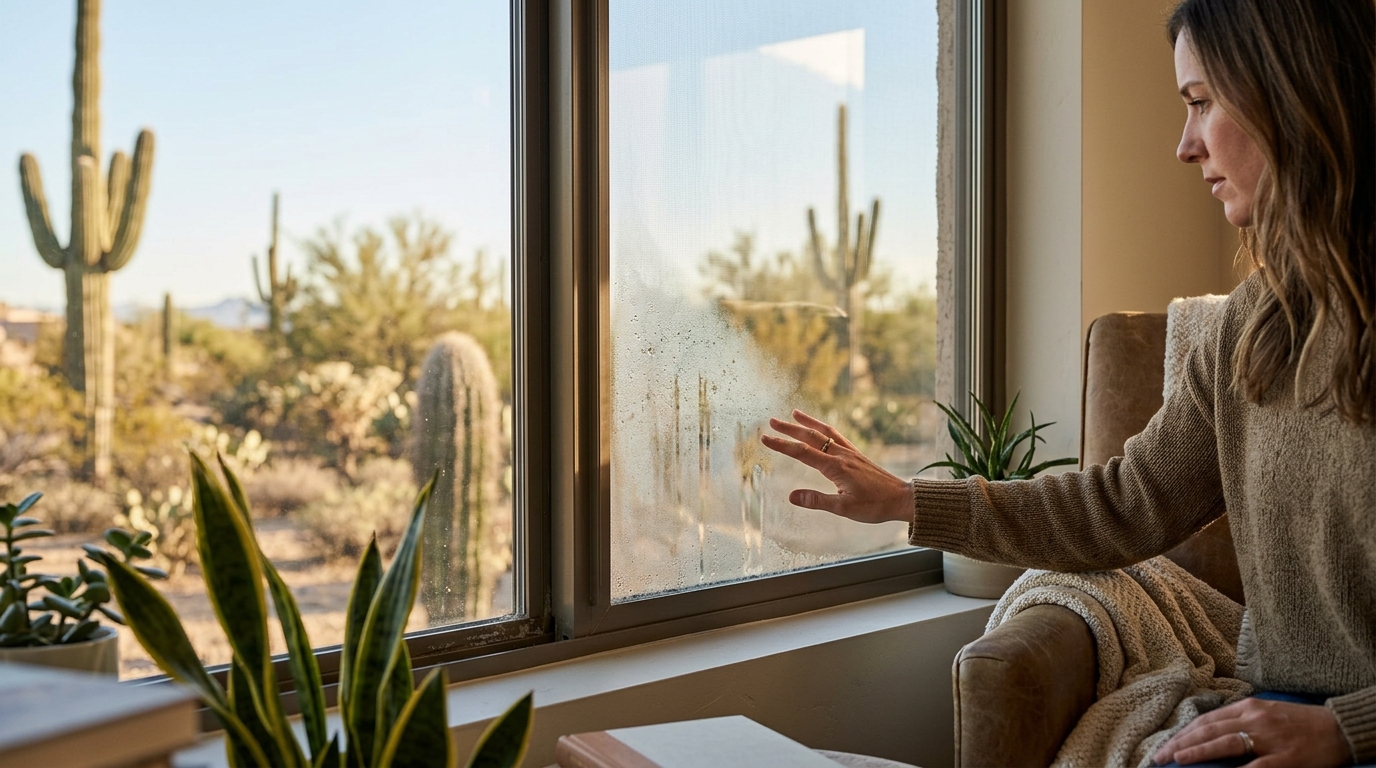
Homeowners in the Sonoran Desert face unique challenges when it comes to maintaining their property. The intense heat and UV exposure accelerate the degradation of building materials, making window integrity a critical concern for both comfort and energy efficiency. According to the U.S. Department of Energy, windows account for approximately 30% of a home's residential energy use, meaning that compromised seals directly impact your utility bills and indoor climate control. Recognizing the early warning signs of seal failure allows you to address issues before they escalate into costly structural damage or complete glass replacement needs.
Foggy or Cloudy Glass Between Panes
One of the most immediate and undeniable indicators of a broken window seal is the appearance of fog, clouds, or condensation trapped between the glass panes. This phenomenon occurs because the insulating glass unit (IGU) is designed to be airtight, filled with inert gas like argon or krypton to provide thermal insulation. When the seal fails, this gas escapes, and humid air from the outside environment enters the space between the panes.
In Tucson, where the temperature differential between day and night can be extreme, this condensation often forms rapidly. Insulating Glass Unit (IGU) is a sealed assembly of two or more panes of glass separated by a spacer and sealed to prevent air and moisture ingress. Once the seal is compromised, the integrity of this unit is lost. Unlike surface condensation that wipes away, fog trapped inside the glass cannot be removed by cleaning. This is a definitive sign that the window requires professional repair or replacement to restore its insulating properties.
Visible Moisture or Condensation Trapped Inside
Beyond general fogging, homeowners may notice distinct droplets of water or persistent dampness clinging to the interior surface of the glass. This is a more advanced stage of seal failure. The sealant surrounding the perimeter of the window has likely cracked or pulled away from the glass, allowing moisture to penetrate the unit.
This trapped moisture can lead to secondary issues, such as mold growth on the window frame or rot in the surrounding woodwork. For homes in Pima County, where humidity levels can spike during monsoon season, this risk is heightened. If you see water pooling at the bottom of the glass pane, it indicates that the desiccant material inside the spacer bar has become saturated and can no longer absorb incoming moisture. At this stage, the window has lost its ability to regulate temperature and humidity, necessitating immediate attention from home glass repair specialists.
Noticeable Drafts and Temperature Fluctuations
Another critical sign of failing window seals is the presence of drafts. If you feel a cold breeze coming from your windows during the winter or hot air infiltrating your home during the scorching Tucson summers, your seals are likely compromised. This airflow bypasses the insulating glass unit and enters through gaps in the frame or the seal itself.
These drafts create significant thermal bridges, forcing your HVAC system to work harder to maintain a comfortable indoor temperature. This inefficiency leads to higher energy costs and increased wear on your heating and cooling equipment. Thermal bridging is the process by which heat flows more rapidly through a less-insulating part of a building envelope, such as a window frame or seal. By addressing these drafts early, you can restore your home's energy efficiency and protect your comfort levels year-round.
Frame Warping or Sealant Deterioration
The physical condition of the window frame and the surrounding sealant provides valuable clues about the health of the window seal. In the intense Arizona sun, materials expand and contract repeatedly. Over time, this thermal cycling can cause the frame to warp or the sealant to crack and shrink.
Inspect the perimeter of your windows for visible gaps, cracks, or peeling caulk. If the sealant is brittle or pulling away from the glass, it is no longer providing a watertight or airtight barrier. This deterioration allows water and air to penetrate the assembly, leading to the internal fogging and drafts mentioned earlier. Regular maintenance of the exterior sealant can extend the life of your windows, but once the internal seal fails, professional window repair is required to restore structural integrity.
Increased Outside Noise Penetration
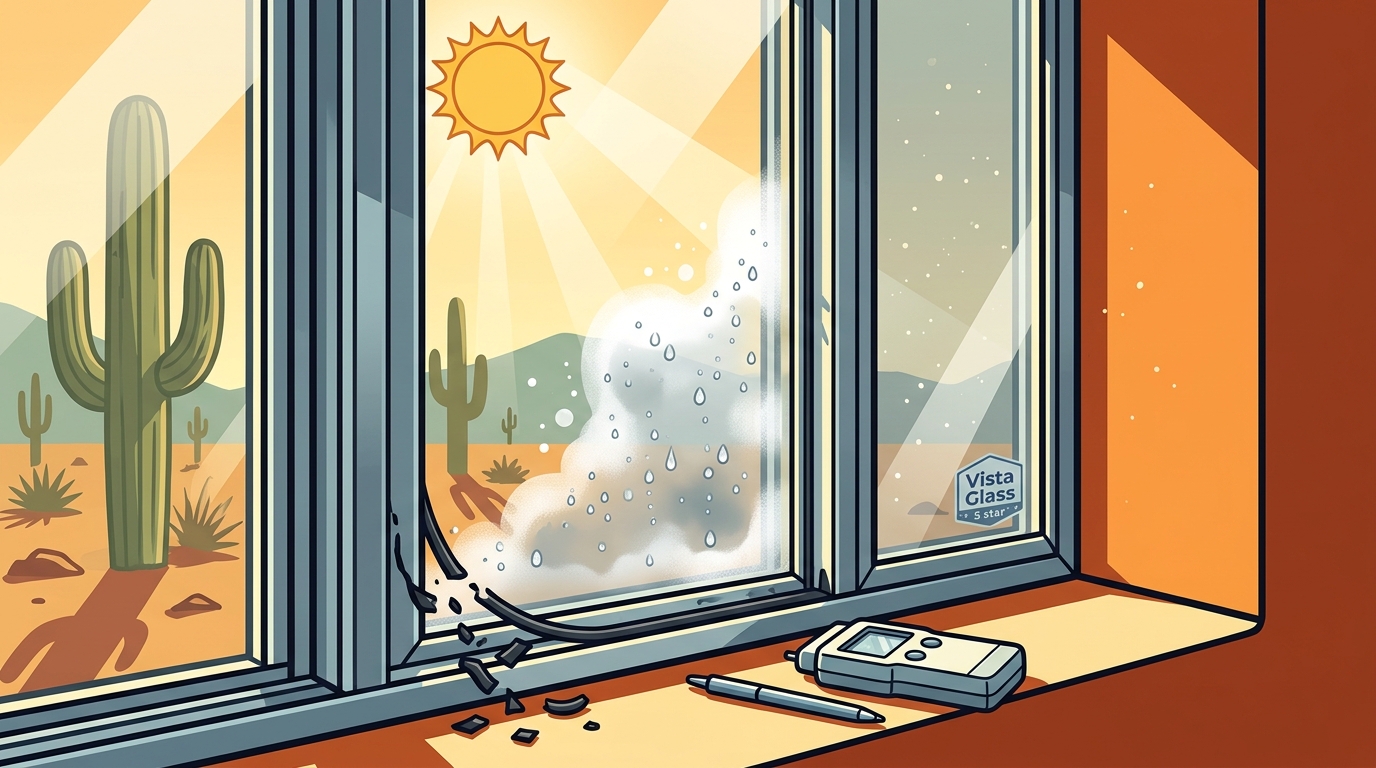
While less commonly discussed, increased noise penetration is a subtle but significant sign of failing window seals. Intact insulating glass units act as a barrier to sound, dampening external noise from traffic, construction, or neighborhood activity. When the seal fails, the structural integrity of the glass assembly is compromised, reducing its sound-dampening capabilities.
If you suddenly notice that street noise or wind sounds are louder inside your home, it may indicate that the seal has broken and the insulating gas has escaped. This loss of acoustic insulation affects the overall comfort and tranquility of your living space. For commercial properties in Tucson, maintaining sound insulation is also crucial for business operations, making commercial glass maintenance equally important.
Window Seal Failure vs. Surface Condensation
It is essential to distinguish between a failing internal seal and surface condensation. Surface condensation occurs on the interior or exterior glass surface due to high humidity and temperature differences. This type of condensation wipes away easily and is often a sign of high indoor humidity rather than window failure.
| Indicator | Failing Internal Seal | Surface Condensation |
|---|---|---|
| Location | Trapped between glass panes | On the surface of the glass |
| Removal | Cannot be wiped away | Wipes away easily |
| Cause | Broken seal, lost insulating gas | High humidity, temperature differential |
| Solution | Professional repair or replacement | Improve ventilation or dehumidify |
Frequently Asked Questions
Can fog between window panes be cleaned?
No, fog trapped between the panes of an insulating glass unit cannot be cleaned. It indicates a broken seal that allows moisture to enter the sealed space. The only permanent solution is to replace the glass unit or the entire window.
How long do window seals typically last in Tucson?
Window seals generally last between 10 to 20 years. However, in Tucson's extreme climate with high UV exposure and temperature fluctuations, seals may degrade faster, sometimes showing signs of failure within 10 years.
Is it cheaper to replace just the glass or the whole window?
Replacing just the glass unit is often more cost-effective if the window frame is in good condition. However, if the frame is warped or rotted, a full window replacement is necessary to ensure proper installation and performance.
Does a failing window seal affect my home's value?
Yes, failing window seals can negatively impact your home's value. Potential buyers may view them as a maintenance burden and a sign of poor energy efficiency, which can lower the perceived value of the property.
Can I repair a broken window seal myself?
While DIY kits exist, they are often temporary fixes. Professional repair ensures that the insulating gas is properly replaced and the seal is hermetically closed, restoring the window's original performance and warranty.
What is the role of argon gas in window seals?
Argon gas is an inert gas used to fill the space between window panes. It is denser than air, providing better thermal insulation and sound dampening than standard air. When the seal fails, this gas escapes, reducing the window's efficiency.
How do I know if my window seal is failing?
Look for fog or condensation between panes, drafts, increased noise, or visible damage to the frame and sealant. If you notice any of these signs, it is likely that your window seal is failing.
Restore Your Home's Efficiency Today
Ignoring the signs of a failing window seal can lead to higher energy bills, discomfort, and potential structural damage. At Vista Glass, we specialize in identifying and resolving these issues with precision and care. Our team of experts uses top-quality materials and advanced techniques to deliver fast, reliable replacements for all makes and models. Whether you need glass replacement or comprehensive window tinting services, we are here to help.
Contact Vista Glass today to schedule an inspection and restore the comfort and efficiency of your home. Call us at 520-744-7766 or visit our contact page to get started.