

Homeowners in the Sonoran Desert face unique challenges when it comes to maintaining their property. The intense heat and UV exposure accelerate wear on building materials, making window integrity a critical component of home comfort. According to recent industry data, approximately 30% of residential window failures in arid climates are directly linked to seal degradation rather than structural frame damage. This statistic highlights the importance of early detection. When a window seal fails, it compromises energy efficiency, indoor air quality, and aesthetic appeal. Recognizing these signs early allows homeowners to address issues before they escalate into costly full replacements. This guide outlines the definitive indicators of seal failure and explains why professional assessment is vital for long-term home preservation.
Foggy or Cloudy Glass Between Panes
The most immediate and undeniable sign of a failing window seal is the appearance of fog or condensation trapped between the glass panes. This phenomenon occurs because the insulating glass unit (IGU) relies on a hermetic seal to maintain a vacuum or gas fill, such as argon, between the layers. When that seal breaks, humid air from the outside environment penetrates the unit. Foggy glass is a permanent condition that cannot be wiped away from the inside. It indicates that the desiccant material, which is designed to absorb any residual moisture during manufacturing, has become saturated and ineffective.
In Tucson, where humidity levels can fluctuate dramatically between monsoon seasons and dry spells, this seal failure happens faster than in more temperate climates. The constant expansion and contraction of the window frame materials due to thermal cycling stress the sealant over time. Once the seal is compromised, the clarity of the glass is permanently lost. This is not merely an aesthetic issue; it represents a complete loss of the window's insulating capability. Homeowners often mistake this for simple surface dirt, but the location of the fog between the panes is the diagnostic key. If you notice this cloudiness, the window unit has failed and requires professional attention. For more insights on maintaining your home's glass integrity, visit our blog section.
Visible Moisture or Condensation Trapped Inside
While fog is a diffuse cloudiness, visible moisture buildup often appears as water droplets or pooling at the bottom of the glass unit. This is a more advanced stage of seal failure. The desiccant bead inside the spacer bar has absorbed all the moisture it can hold, and excess humidity is now condensing into liquid form. This trapped water can lead to further damage within the window assembly. It may cause corrosion on the metal spacers or promote mold growth on the surrounding window frame, particularly if the frame is made of wood or composite materials.
Moisture trapped inside the glass also refracts light differently, creating a distorted view that can be distracting and unpleasant. In severe cases, the pressure from the expanding moisture can cause the glass panes to bow slightly, altering the structural integrity of the unit. This is a clear signal that the window is no longer performing its primary function of weatherproofing. If you see water droplets inside your windows, do not wait for the seal to fail completely. Contacting a professional for a home glass repair assessment is crucial to prevent damage to your window frames and surrounding walls.
Unexplained Drafts and Temperature Fluctuations
Windows are designed to act as a thermal barrier between the interior of your home and the harsh exterior environment. When the seal fails, this barrier is compromised. One of the subtlest but most impactful signs of seal failure is the presence of drafts. You might feel a cold breeze coming from the window in the winter or hot, dry air in the summer. This airflow indicates that the airtight seal around the glass unit or the frame itself has deteriorated.
Temperature fluctuations are closely related to drafts. If you notice that the area around your windows feels significantly colder or hotter than the rest of the room, the insulating gas has likely escaped. Argon and krypton gases are heavier than air and are used to slow down heat transfer. When the seal breaks, these gases leak out and are replaced by ambient air, which conducts heat much more efficiently. This loss of insulation forces your HVAC system to work harder to maintain a comfortable temperature. If you suspect air leakage, a professional inspection can determine if the issue is the seal or the frame. Learn more about our window repair services to understand how we address these thermal breaches.
Sudden Spikes in Energy Costs
For many homeowners, the first financial indicator of window seal failure is a sudden, unexplained increase in their utility bills. Windows account for a significant portion of a home's heat gain and loss. When seals fail, the thermal performance of the window drops drastically. In Tucson, where summer temperatures regularly exceed 100 degrees Fahrenheit, failing windows allow immense amounts of heat to enter the home. This forces air conditioning units to run continuously, leading to higher energy consumption.
According to energy efficiency studies, poorly sealed windows can increase heating and cooling costs by up to 30%. This is a substantial financial burden that accumulates over time. If your energy bills have risen without a corresponding increase in usage or rate changes, your windows are a likely culprit. The loss of insulating gas and the infiltration of outside air create a thermal bridge that bypasses your home's insulation. Addressing this issue is not just about comfort; it is a smart financial decision. Restoring your window integrity can lead to immediate savings on your monthly utilities. Explore our service offerings to see how we can help you reduce your energy footprint.
Frame Warping and Glass Settling
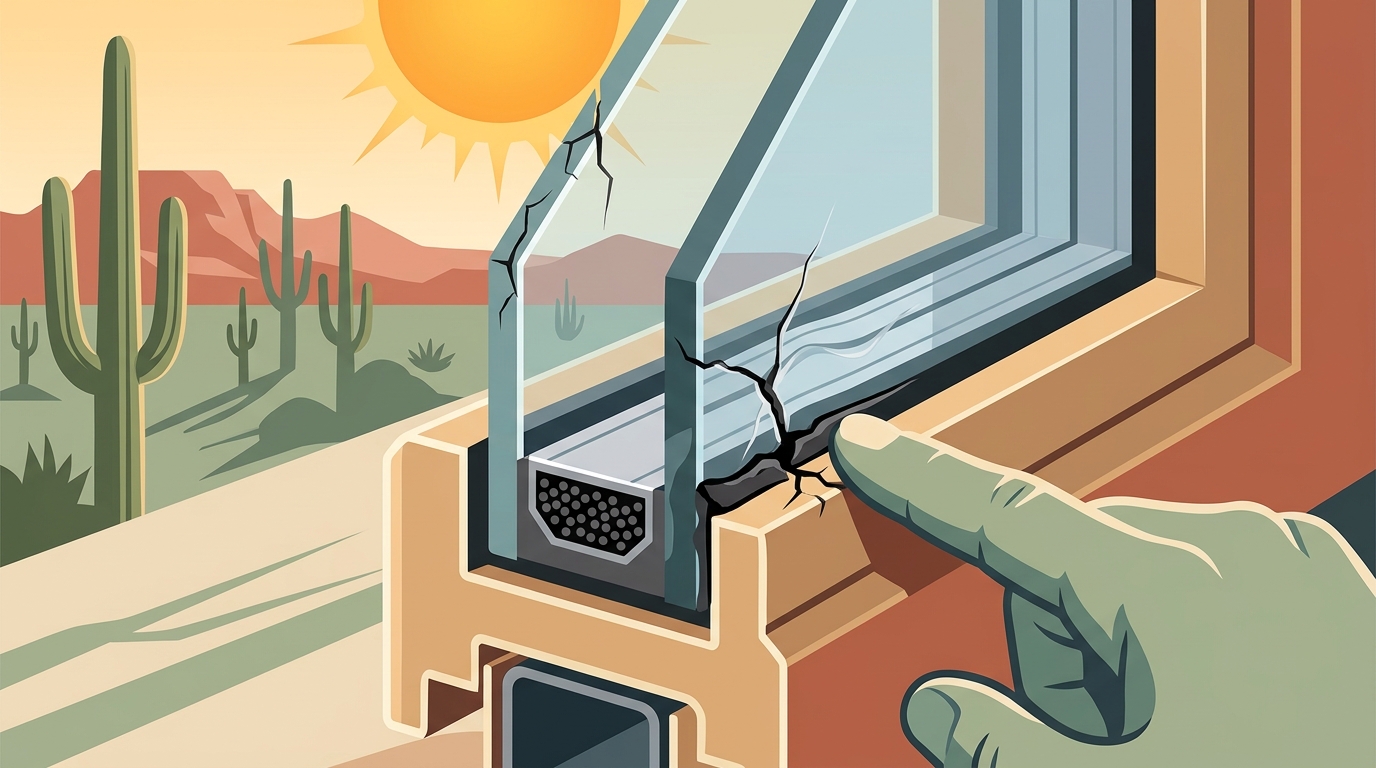
While the seal itself is the primary concern, its failure often leads to secondary damage in the window frame. Moisture that penetrates a failed seal can cause wooden frames to rot, warp, or swell. Metal frames may corrode, and vinyl frames can become discolored or brittle. This structural degradation can make the window difficult to open or close, further compromising the home's security and weatherproofing.
Glass settling is another sign that the seal and the frame are no longer supporting the glass unit correctly. If the glass appears to be sagging or if there are visible gaps between the glass and the frame, the structural integrity of the window is compromised. This can be dangerous, as it increases the risk of the glass breaking under pressure. In extreme cases, the weight of the glass can cause the frame to bow, making it impossible to seal properly even if the sealant is replaced. Regular inspections can catch these early signs of frame degradation. For expert advice on maintaining your window frames, check out our about us page to learn about our commitment to quality craftsmanship.
Repair Options vs. Full Replacement
When seal failure is detected, homeowners often wonder if they can simply repair the seal. In most cases, once the hermetic seal of an insulating glass unit is broken, it cannot be reliably repaired. The desiccant is saturated, and the gas fill is lost. While some companies offer "drill and fill" services to restore the gas, this is often a temporary fix that does not address the underlying seal failure. The most effective and long-lasting solution is usually full glass unit replacement or complete window replacement.
At Vista Glass, we assess each situation to determine the best course of action. If the frame is still in good condition, we may be able to replace just the glass unit. However, if the frame is warped or damaged, a full window replacement is necessary to ensure proper performance. Our team uses advanced techniques and premium materials to ensure a perfect fit and optimal safety. We prioritize quick turnaround times without compromising on quality. Understanding the difference between repair and replacement is key to making an informed decision. Read our glass replacement guide for more details on our process.
Repair Options vs. Full Replacement
When seal failure is detected, homeowners often wonder if they can simply repair the seal. In most cases, once the hermetic seal of an insulating glass unit is broken, it cannot be reliably repaired. The desiccant is saturated, and the gas fill is lost. While some companies offer "drill and fill" services to restore the gas, this is often a temporary fix that does not address the underlying seal failure. The most effective and long-lasting solution is usually full glass unit replacement or complete window replacement.
At Vista Glass, we assess each situation to determine the best course of action. If the frame is still in good condition, we may be able to replace just the glass unit. However, if the frame is warped or damaged, a full window replacement is necessary to ensure proper performance. Our team uses advanced techniques and premium materials to ensure a perfect fit and optimal safety. We prioritize quick turnaround times without compromising on quality. Understanding the difference between repair and replacement is key to making an informed decision. Read our glass replacement guide for more details on our process.
Key Takeaways
- Foggy Glass: Condensation between panes indicates a broken hermetic seal and saturated desiccant.
- Moisture Buildup: Water droplets inside the unit signal advanced seal failure and potential frame damage.
- Drafts: Unexplained air leakage suggests loss of insulating gas and compromised thermal barriers.
- Energy Costs: Sudden spikes in utility bills are often a direct result of failing window insulation.
- Frame Damage: Warping or rotting frames often accompany seal failure and require comprehensive repair.
- Professional Assessment: DIY repairs are rarely effective; professional inspection is crucial for accurate diagnosis.
- Long-Term Solution: Full glass unit or window replacement is typically the only permanent fix for seal failure.
Frequently Asked Questions
Can a failing window seal be repaired?
In most cases, once the seal of an insulating glass unit is broken, it cannot be permanently repaired. The desiccant is saturated, and the insulating gas has escaped. The most effective solution is usually replacing the glass unit or the entire window.
How long does a window seal last?
The lifespan of a window seal varies based on climate and installation quality. In harsh environments like Tucson, seals may last between 10 to 20 years. Extreme heat and UV exposure can accelerate the degradation of the sealant materials.
Is condensation between window panes normal?
No, condensation between panes is not normal. It indicates that the seal has failed and humid air has entered the insulating unit. This is a sign of seal failure that requires professional attention.
Does a failing window seal affect home value?
Yes, failing windows can negatively impact home value. Potential buyers often view window issues as a significant maintenance burden. Replacing failing windows can improve curb appeal and energy efficiency, thereby increasing property value.
What is the difference between window repair and replacement?
Window repair typically involves fixing minor issues like hardware or weatherstripping. Window replacement involves installing a new window unit, which is necessary when the frame or glass seal is severely damaged.
How can I prevent window seal failure?
While you cannot completely prevent seal failure, regular maintenance and inspections can help. Avoiding harsh cleaning chemicals and ensuring proper drainage around the window frame can extend the life of the seal.
Why is professional installation important?
Professional installation ensures that windows are properly sealed and insulated. Improper installation can lead to premature seal failure, drafts, and water damage. Certified technicians have the expertise to handle complex installations.
Contact Vista Glass for Expert Assessment
If you suspect your windows are failing, do not wait for the damage to worsen. Early intervention can save you money on energy bills and prevent costly structural repairs. Vista Glass is dedicated to providing top-notch window replacement and repair services with a focus on quality and customer satisfaction. Our team combines years of experience with a passion for excellence, ensuring your windows are handled with precision and professionalism. Located in the heart of Tucson, we are committed to exceeding industry standards and offering unparalleled expertise. Contact us today to schedule your inspection and restore your home's comfort and efficiency.